
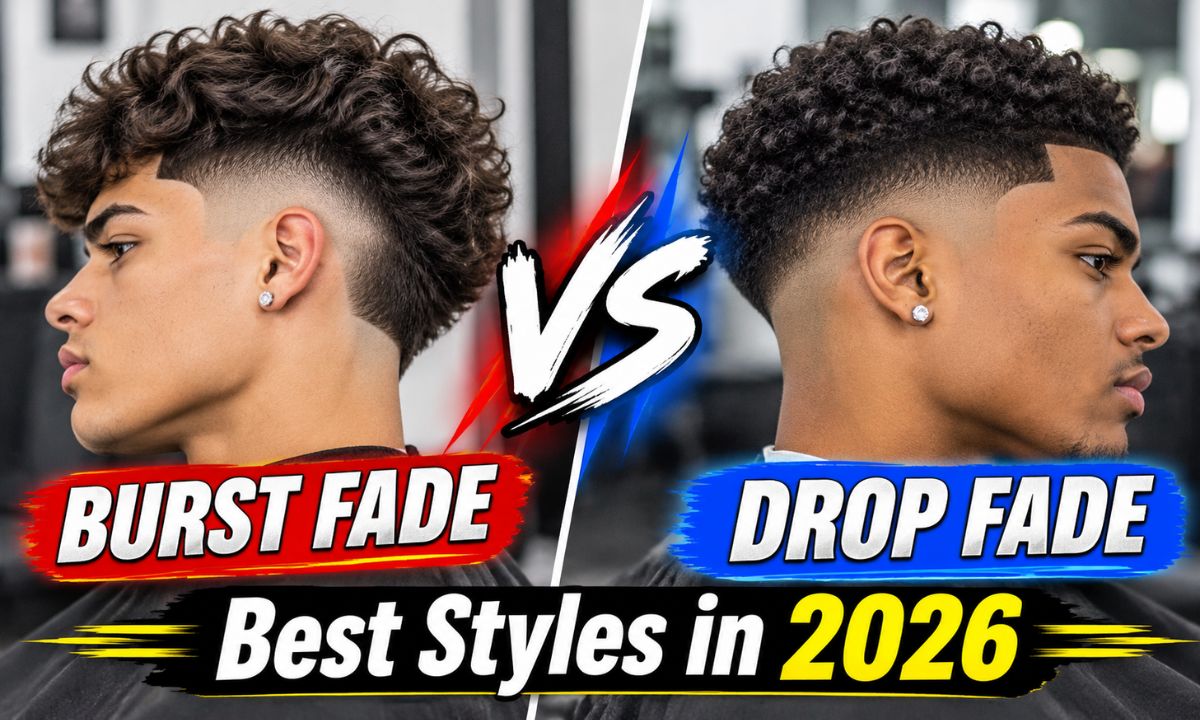
Picking between a burst fade and a drop fade is harder than it looks. Both cuts look sharp, but they sit on the head in different ways. One curves around the ear. The other follows the skull and dips behind it.
This guide explains both cuts in plain words. You will learn how each one works, how to match it to your hair type, and what to tell your barber. Every section is short and to the point.
Burst Fade vs Drop Fade: Five Matched Visual Comparisons
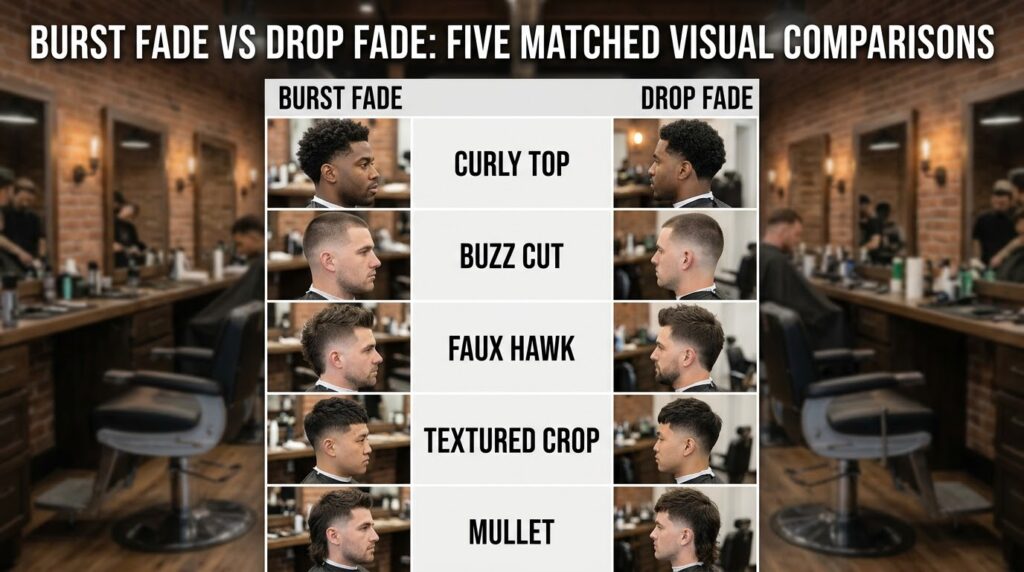
Seeing the cuts side by side is the fastest way to understand them. The same fade looks different on every hair type. Here is what to expect on five common looks.
Straight Textured Crop
On a straight textured crop, the burst fade makes a clean semicircle around the ear. The top stays short and choppy. The drop fade follows the head curve and drops lower behind the ear. It gives a longer, smoother line.
Curly Top
Curly hair adds volume on top. A burst fade keeps the sides tight and lets the curls stand out in front. A drop fade gives a more flowing shape from the temple to the neck.
Coily Top
Coily hair holds a sharp edge well. A burst fade shows off the curved shape clearly. A drop fade adds a strong, deep line that stands out from the back.
Wavy Rear Three-Quarter
Wavy hair looks best when the fade blends into the length. From the back three-quarter view, the burst fade creates a rounded pocket. The drop fade creates a smooth downward slope.
Straight Rear Outline
From directly behind, straight hair shows every detail. The burst fade has a fan shape. The drop fade has a curved outline that falls toward the nape.
Burst Fade vs Drop Fade: Three Placement References
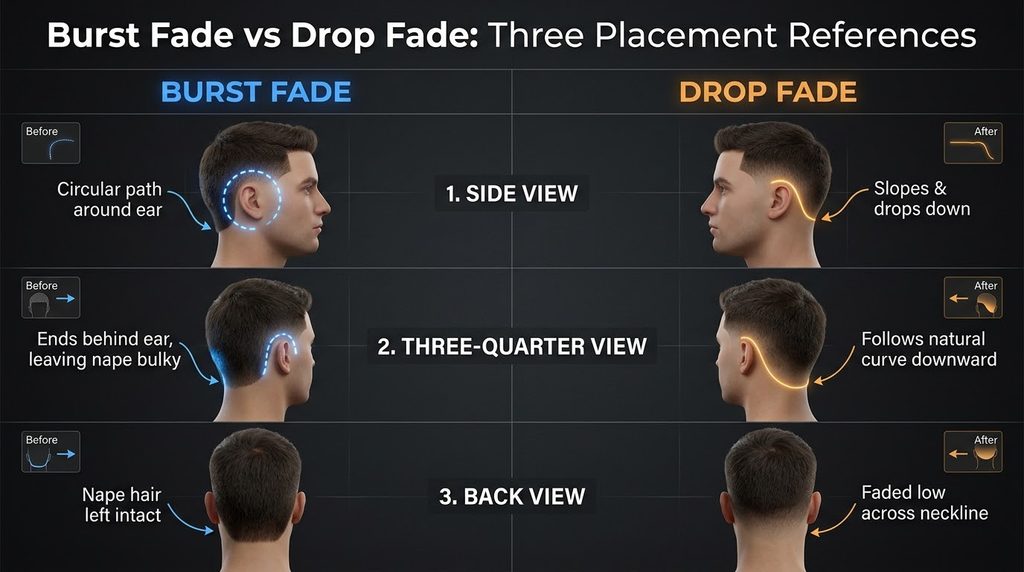
Placement is the main difference between these two cuts. Think of three simple reference points.
- Temple: Both fades start here. The drop fade starts a little higher.
- Ear: The burst fade wraps around it. The drop fade passes behind it.
- Nape: The burst fade usually keeps the neckline natural. The drop fade lowers the line toward the neck.
| Reference Point | Burst Fade | Drop Fade |
| Temple | Starts mid-height | Starts higher |
| Ear | Curves around it | Drops behind it |
| Nape | Stays shorter in length | Falls lower |
Compare Your Preferences First
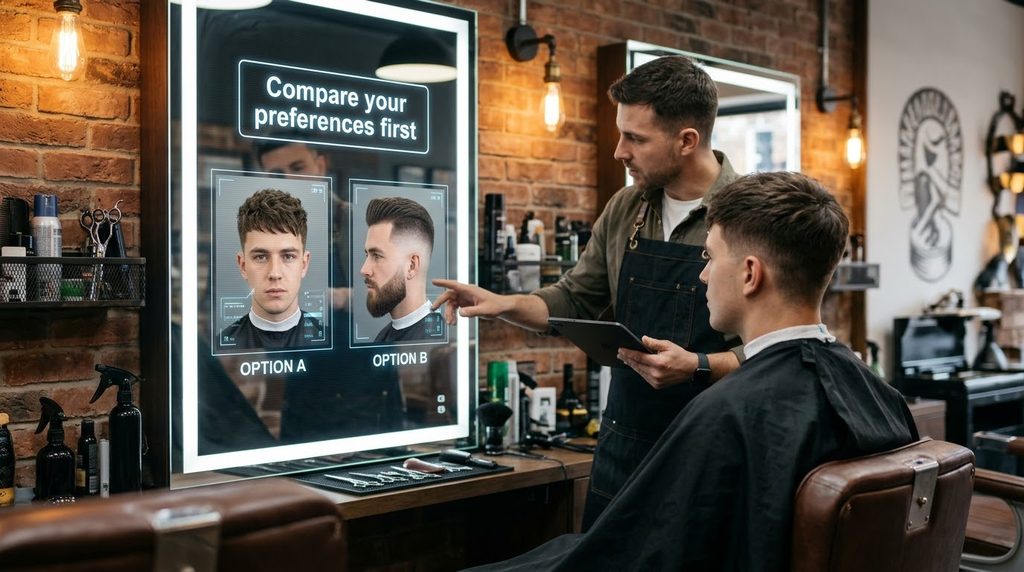
Before you book a haircut, think about what you want. A few simple questions can save you from a bad cut.
- Do you want a cut that frames the ear?
- Do you like a long, flowing line at the back?
- Is your hair thick, thin, curly, or straight?
- Do you plan to keep the length on top?
- How often will you visit the barber?
If you like a bold shape near the ear, lean toward the burst fade. If you prefer a smooth line that follows your head, lean toward the drop fade.
Burst Fade vs Drop Fade at a Glance
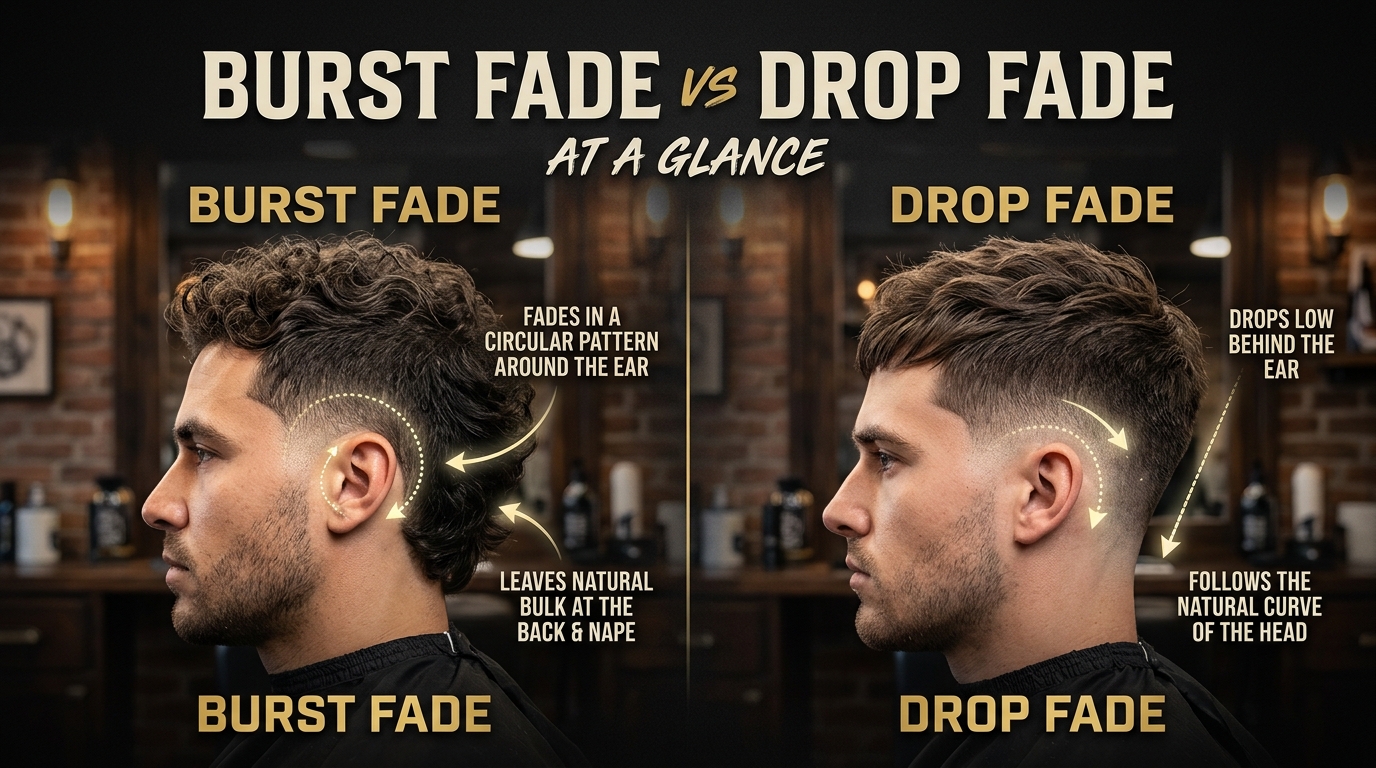
This table gives a quick answer. Use it as a fast reference before you read the details.
| Feature | Burst Fade | Drop Fade |
| Shape | Semicircle around the ear | Curve that drops behind the ear |
| Focus area | Ear and sideburn | Back of the head and neck |
| Best with | Mullets, textured tops, curls | Quiffs, pompadours, fringe |
| Look | Bold and modern | Clean and classic |
| Upkeep | Every 2 to 3 weeks | Every 2 to 3 weeks |
What a Burst Fade Actually Does
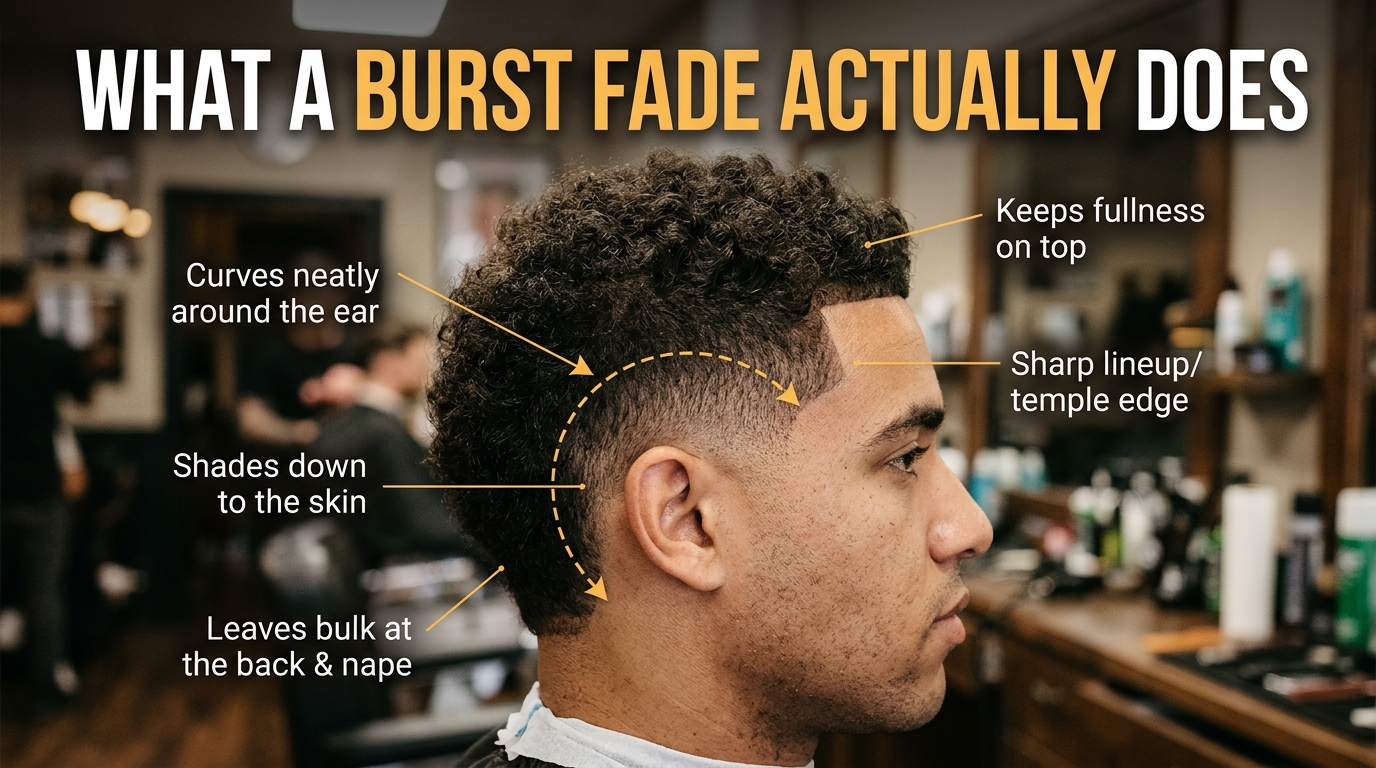
A burst fade creates a fan or half circle around the ear. The hair is cut very short close to the ear. Then it grows longer as the fade moves outward. The back often stays longer, which is why it pairs well with a mullet.
The key idea is contrast. The area around the ear is tight, while the back and top keep length. This makes the cut look bold and modern.
Burst fades work well on most hair types. They suit people who want a strong style without shaving their whole head.
What a Drop Fade Actually Does
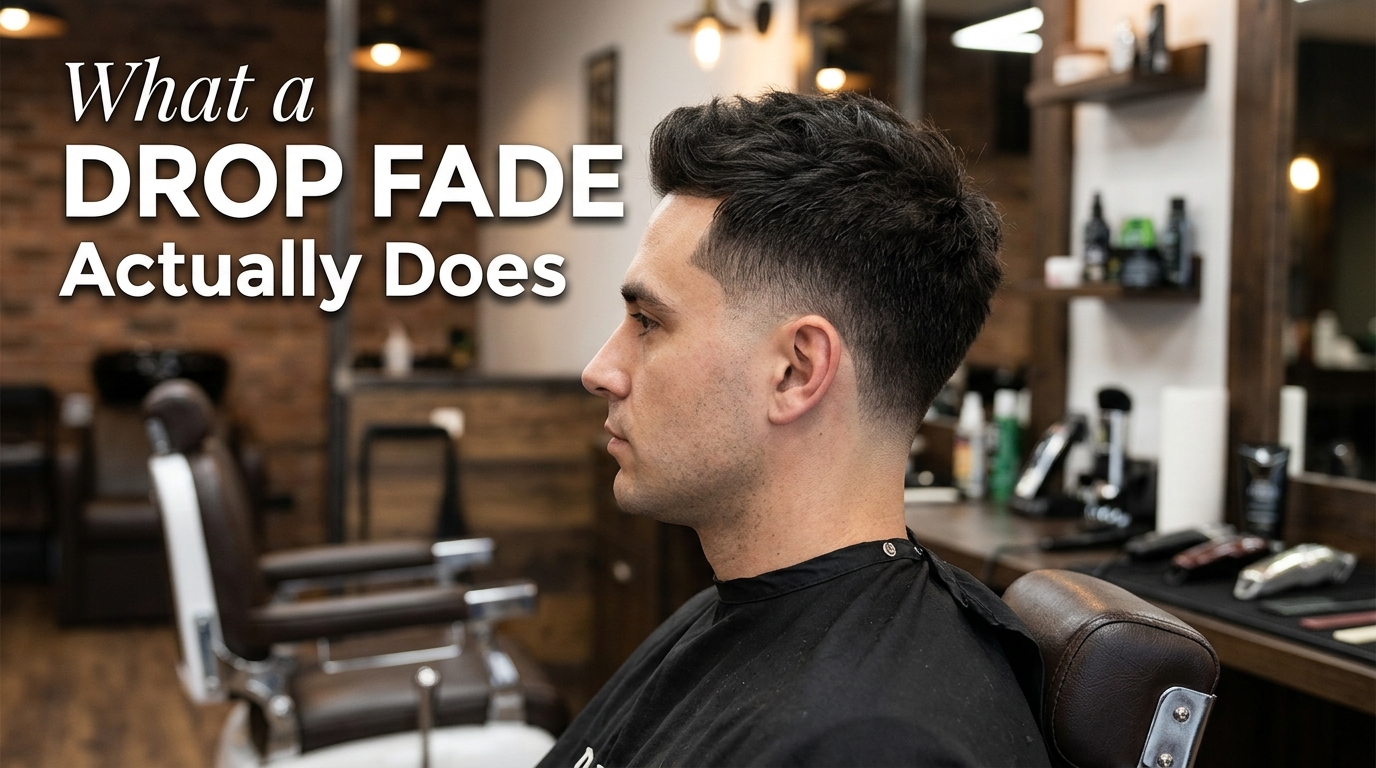
A drop fade follows the natural curve of your head. The line starts near the temple and then “drops” behind the ear. It ends lower at the nape of the neck.
This shape makes the head look balanced. It also adds depth to the back view. Many people like it because it looks neat and well planned.
The drop fade works with short, medium, and long hair on top. It is a safe pick if you want a clean look that never feels too loud.
The Ear and Nape Test
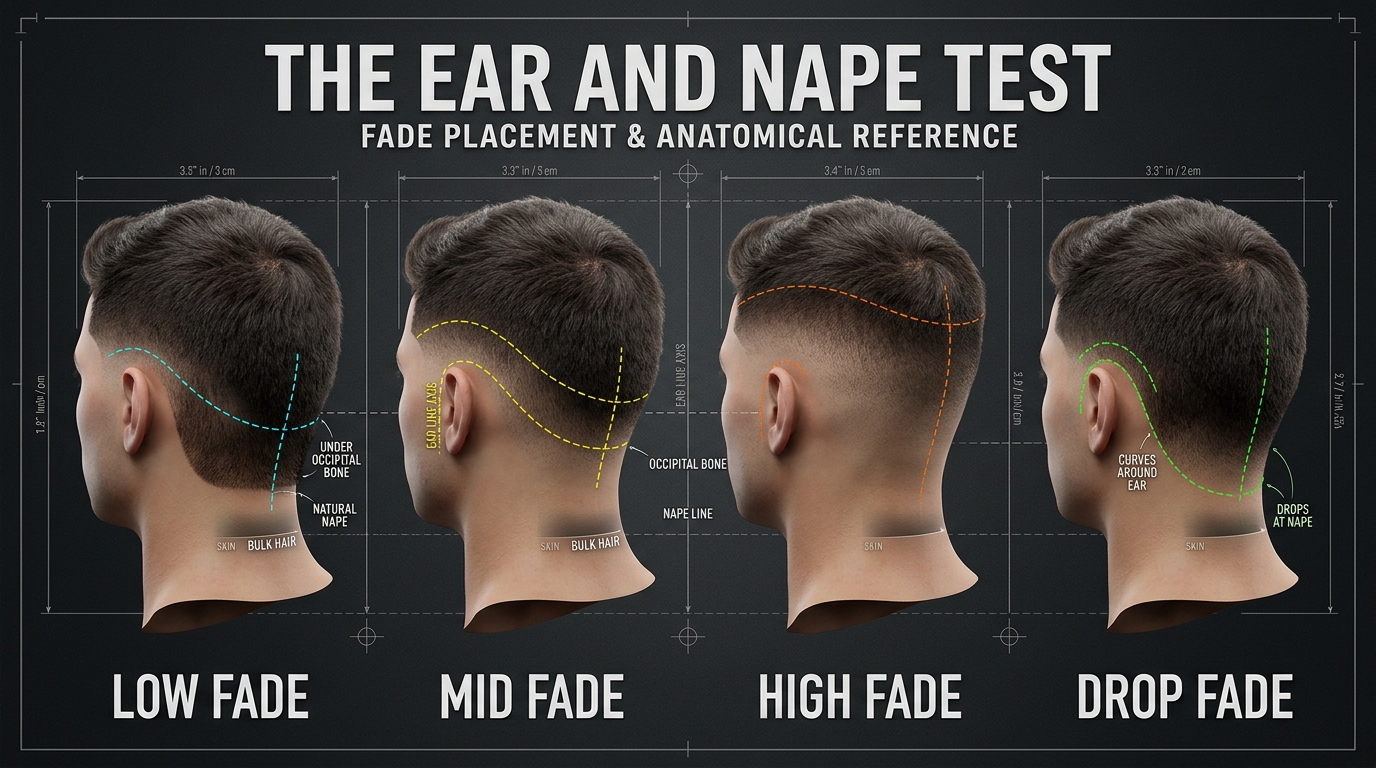
You can test which fade fits you with two simple checks. Look at your ear and your nape in a mirror.
- Ear check: If you have prominent ears, a burst fade may draw attention to them. A drop fade is gentler.
- Nape check: If your neck hair grows low or in a pointed shape, a drop fade can clean it up well.
- Head shape: A rounded head suits the burst fade. A flatter back suits the drop fade because it adds shape.
If both checks point in different directions, ask your barber. They can see your head shape from all angles.
See More : 15 Best Mod Haircuts for Men in 2026
Choose the Finish Separately
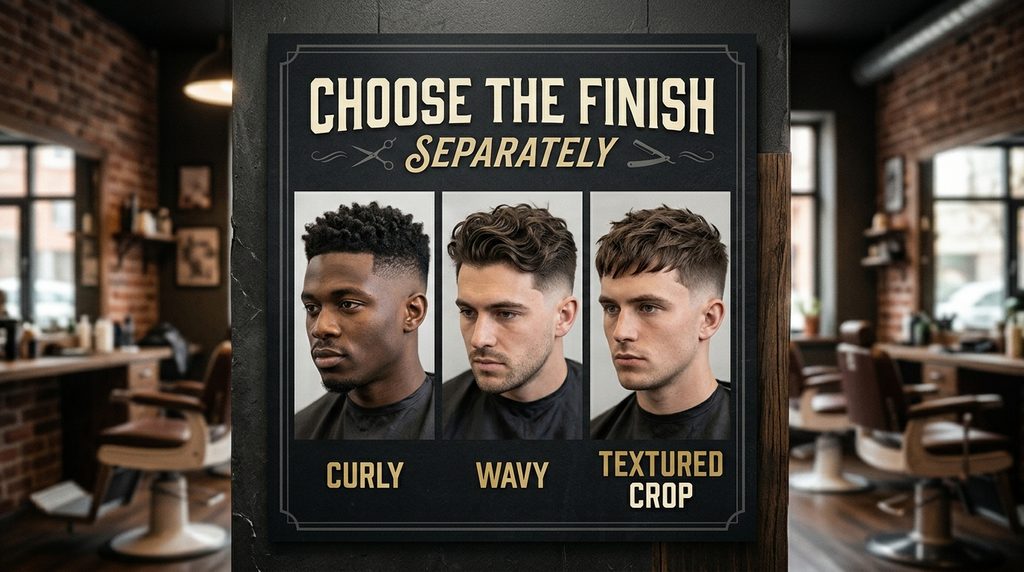
Finish means how short the fade gets at the bottom. You can choose it separately from the fade style.
| Finish | Look | Best For |
| Skin fade | Very clean, bare skin | Sharp, bold looks |
| Low fade | Starts near the ear | Work and school |
| Mid fade | Starts at the temple | Everyday wear |
| Shadow fade | Soft, blurry end | Natural style |
A skin finish makes the shape stand out. A shadow finish softens it. Pick the one that matches your daily life.
Which One Should You Choose?
Both fades look great. The best one depends on your hair, your face, and your style. Use the lists below to decide.
Choose a Burst Fade If…
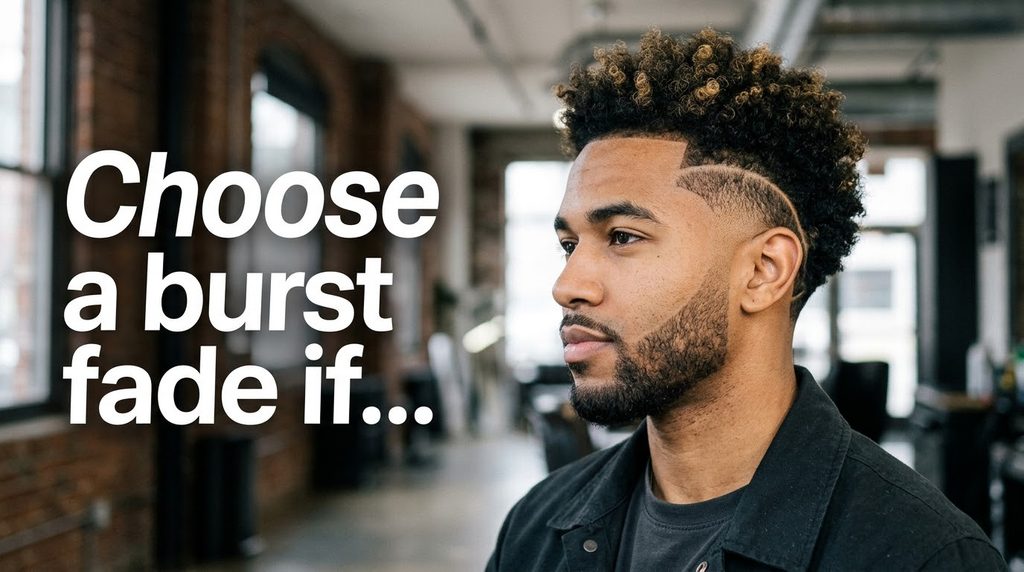
- You want a bold look around the ear.
- You plan to grow a mullet or keep length at the back.
- You have curly or textured hair.
- You like modern, trendy cuts.
Choose a Drop Fade If…
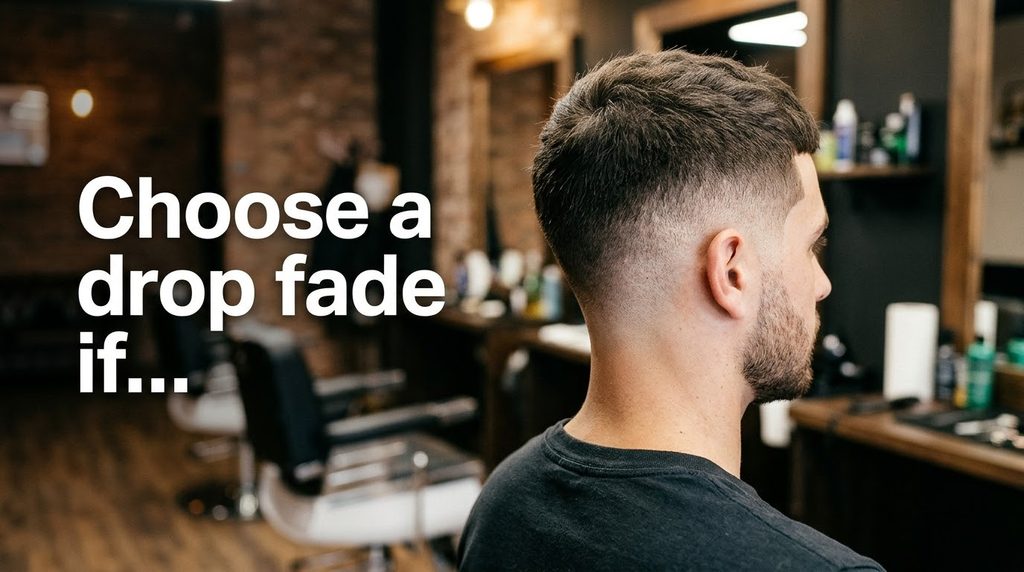
- You want a clean, classic shape.
- You like a smooth line behind the ear.
- You have a pompadour, quiff, or slick back.
- You prefer a cut that fits every setting.
Drop Burst Fade: Can You Combine Them?
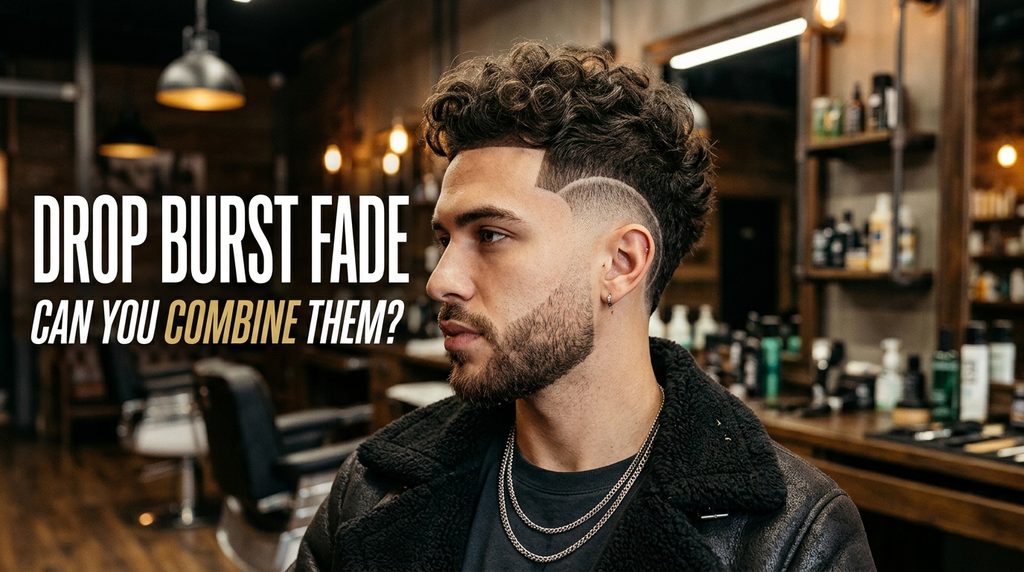
Yes, you can. A drop burst fade mixes both ideas. The fade curves around the ear like a burst. Then it drops lower toward the nape like a drop.
This hybrid gives a strong shape from every angle. It looks great with a mullet, a curly top, or a longer fringe. It also gives your barber room to be creative.
A drop burst fade takes skill. Choose a barber who has done it before. Show a photo so you both agree on the final look.
How to Ask Your Barber
Clear words help your barber get the cut right. Photos help even more. Bring two or three pictures from the front, side, and back.
Use simple terms like these:
- “Burst fades with a longer back.”
- “Drop fade, low at the nape.”
- “Skin finish at the bottom.”
- “Keep the length on top.”
Also tell your barber how much you want to keep. Mention your daily routine. If you use a product, say so. These small details change how the cut is shaped.
Maintenance and Grow-Out
Fades fade out fast. Most people need a touch-up every 2 to 3 weeks. Skin fades need more care than shadow fades.
At home, keep your hair clean and moisturized. Use a light product to shape the top. Avoid cutting the sides yourself, because the curve is easy to ruin.
When you grow it out, a burst fade turns into a natural mullet shape. A drop fade grows into a soft taper. Both can look good in the in-between stage if you trim the neck line.
Reference for Fade Technique
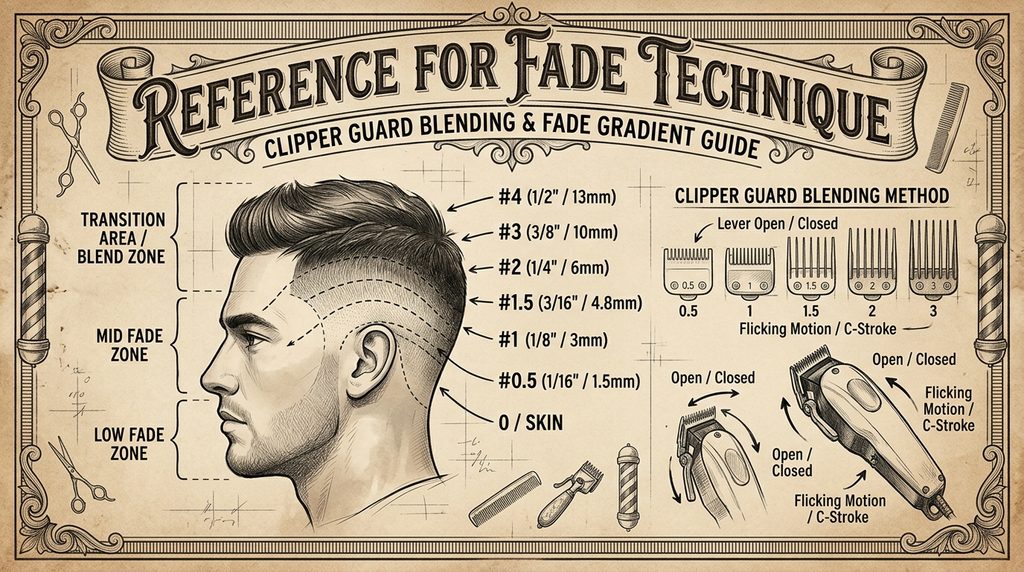
Barbers use a few simple tools to make these fades. Knowing the basics helps you talk to them with confidence.
- Clippers with guards: Used for the base of the fade.
- Trimmers: Used for clean lines at the ear and neck.
- Scissors and comb: Used to blend the top into the sides.
- Foil shaver: Used for a skin finish.
A good fade is built in steps. The barber starts with a shorter guard at the bottom and moves up. Each step is blended into the next. The curve of the burst or drop is shaped last.
Burst Fade vs Fade
A regular fade goes straight around the head. It gets shorter evenly from top to bottom. A burst fade only fades around the ear and leaves the back longer.
So a regular fade is flat and even. A burst fade is curved and focused. If you want a simple cut, pick a regular fade. If you want a statement, pick a burst fade.
Burst vs Drop Fade
The burst fade circles the ear. The drop fade curves behind it and falls lower. That is the main difference.
Burst is bolder and more modern. Drop is smoother and more classic. Both can be done at low, mid, or high levels.
Burst Drop Fade
A burst drop fade is another name for the combined style. It uses the round shape of a burst and the downward curve of a drop. The result is a deep, flowing fade around the ear and neck.
It suits longer tops and strong haircuts. It is a good choice if you want something different from a plain fade.
Drop Fade vs Burst Fade
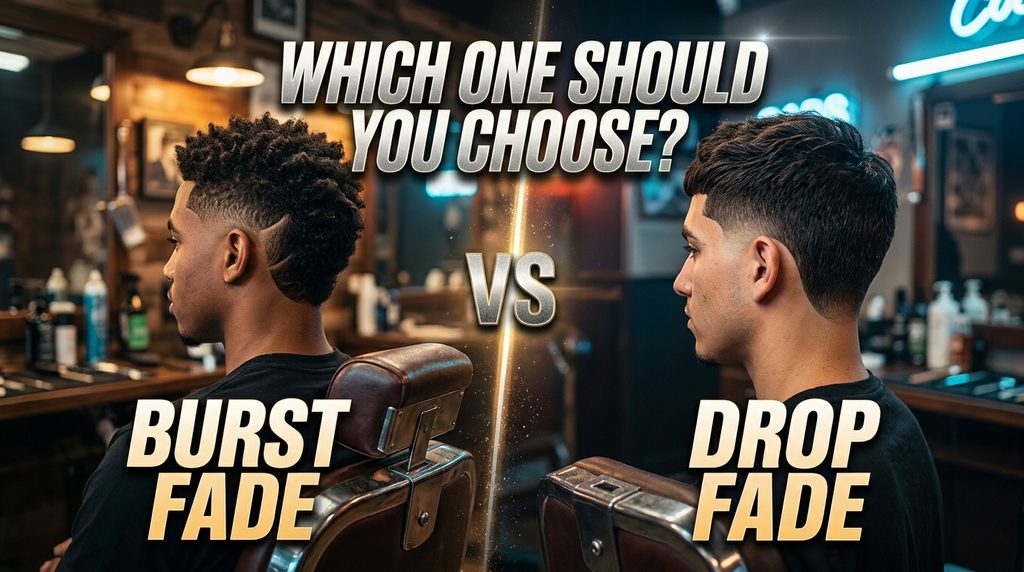
Here the main question is placement. A drop fade follows the head and goes lower at the back. A burst fade stays around the ear and leaves the back full.
Choose the drop fade for a neat finish. Choose the burst fade for contrast and attitude.
Burst Fade vs Drop Fade
Short answer: the burst fade is rounded and ear focused. The drop fade is curved and back focused.
| Question | Burst Fade | Drop Fade |
| Where does it curve? | Around the ear | Behind the ear |
| Style feeling | Bold | Classic |
| Back length | Often longer | Often lower and tighter |
| Popular with | Mullets | Pompadours |
Fade vs Burst Fade
A standard fade is a straight, even gradient. A burst fade breaks that rule by curving around the ear. It is more shaped and more stylish.
Standard fades are easy to maintain. Burst fades need a barber who understands shape.
Burst Fade vs Taper Fade
A taper fade is subtle. It shortens only at the neckline and sideburns. A burst fade is much stronger and cuts deeper around the ear.
If you work in a formal place, the taper is safer. If you want a trendy look, the burst is better.
Drop Burst Fade
This is the hybrid style. It joins the round ear shape of a burst with the lowered back line of a drop. The result is a dramatic curve that looks sharp from every side.
Ask for a photo reference. This cut is detailed, and small mistakes are easy to see.
What Is Burst Fade
A burst fade is a haircut with a half circle shape around the ear. The hair near the ear is very short. It gets longer as it moves away.
It is popular with mullets, curls, and textured tops. The name comes from the look of the hair “bursting” out from the ear.
Burst Fade Mullet
The burst fade mullet is one of the biggest trends of 2026. The sides are faded in a curve around the ear. The back stays long and flowing.
It works on straight, wavy, and curly hair. Use a light cream or sea salt spray to style it. Trim the ends every few weeks so it stays tidy.
Burst Fade vs Drop Fade Black
On Black hair, both fades look very sharp. Tight curls and coils hold a clean edge well. A burst fade shows a strong, rounded outline.
A drop fade gives a deep line at the back. Many barbers add a crisp line-up at the front. Use a good moisturizer. It keeps the skin healthy and the fade clean.
Burst Fade vs Drop Fade Reddit
Reddit users often say the same thing. The burst fade looks bold and fits mullets. The drop fade looks safer and more classic.
Most users agree on one tip. Bring a photo to your barber. Words can be unclear, but a picture shows exactly what you want.
Burst Fade vs Drop Fade Straight Hair
Straight hair shows every line. A burst fade looks very clear and clean on it. A drop fade shows a smooth curve and a neat neckline.
Straight hair needs good blending. If the fade is rough, you will see it. Choose a skilled barber and keep up with trims.
Frequently Asked Questions
What is the main difference between a burst fade and a drop fade?
A burst fade curves around the ear in a half circle. A drop fade curves behind the ear and falls lower toward the neck.
Which is better, a burst fade or a drop fade?
Neither is better for everyone. Pick a burst fade for a bold look. Pick a drop fade for a clean, classic shape.
What is a burst fade?
A burst fade is a haircut that fades in a half circle around the ear. The back and top stay longer.
Can you get a drop burst fade?
Yes. A drop burst fade mixes a rounded ear curve with a lower back line. Show your barber a photo first.
Is a burst fade good for a mullet?
Yes. A burst fade is one of the best fades for a mullet. It keeps the sides short and the back long.
How often should you get a burst or drop fade touched up?
Most people need a touch-up every 2 to 3 weeks. Skin fades may need it sooner.
Does a burst fade work on straight, curly, and Black hair?
Yes. It works on all hair types. Curly and coily hair often shows the shape even better.
Final Thoughts
The burst fade and drop fade are both strong choices in 2026. The burst fade is bold and works around the ear. The drop fade is smooth and works at the back. You can even mix them into a drop burst fade.
Pick the one that suits your hair, head shape, and daily style. Show your barber a photo. Keep up with regular trims, and your fade will look fresh every time.

Ronan Mercer is a measurement focused content writer and researcher at Only Faxhion. He creates clear, practical articles about units, sizes, dimensions, conversions, and measurement concepts, helping readers understand everyday measurement topics through well researched and easy to follow explanations.