
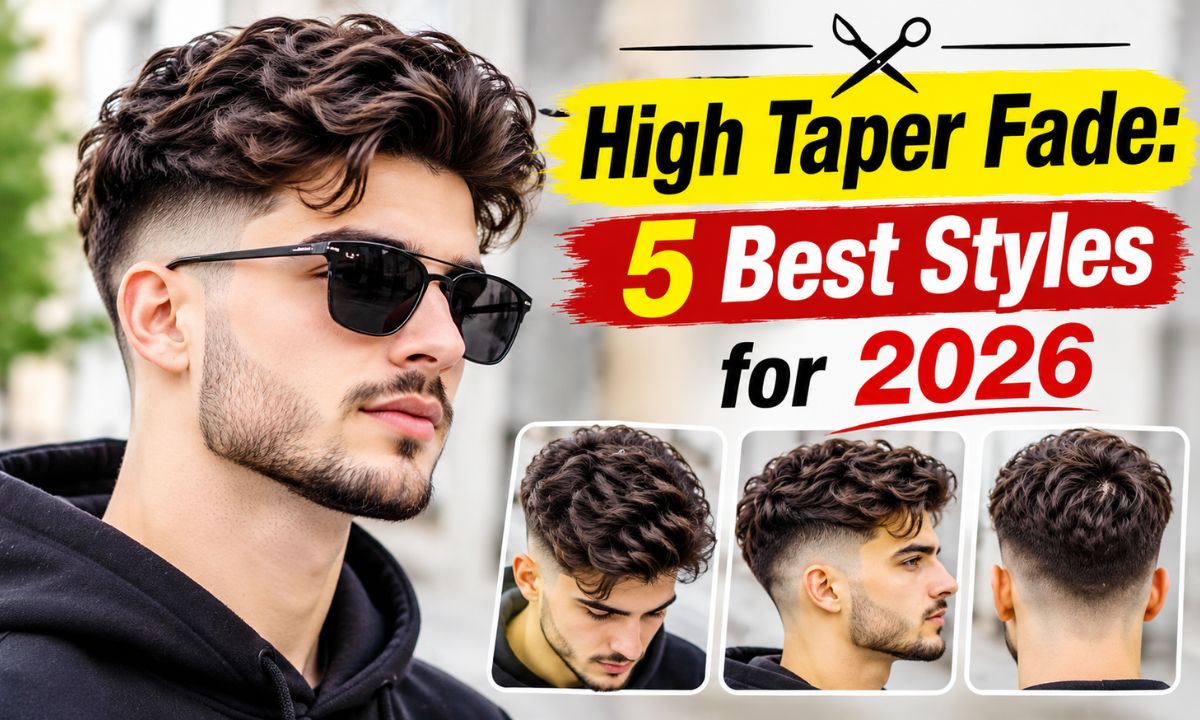
The high taper fade is one of the cleanest cuts you can ask for. It keeps the top full and the sides neat. The fade starts high on the head and blends down to the neckline. It looks sharp at work, at the gym, and at events.
In 2026, barbers are mixing this cut with texture, waves, and sharp lines. This guide covers every style, face type, hair type, and barber tip you need. Read it before your next visit.
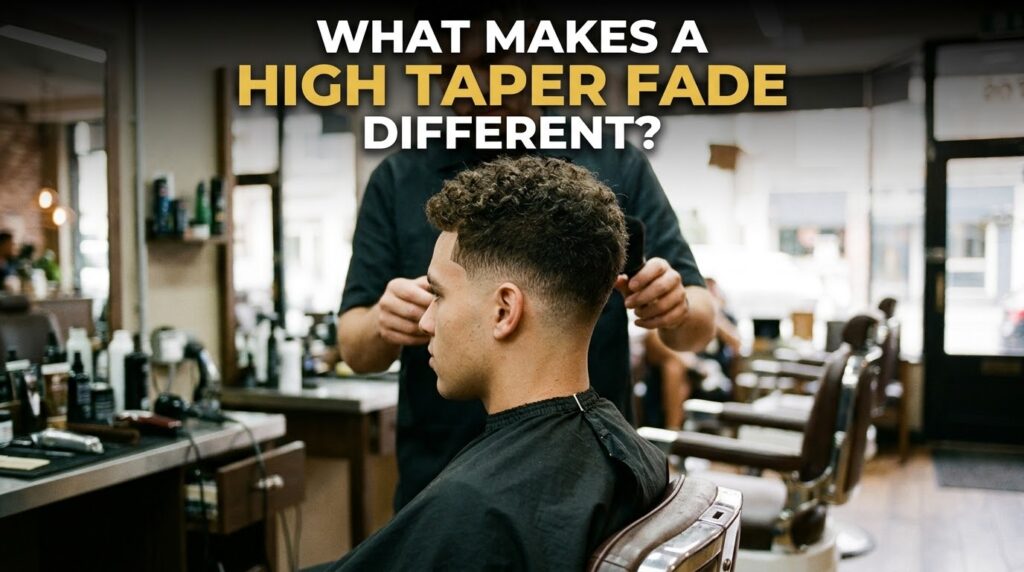
What Makes a High Taper Fade Different?
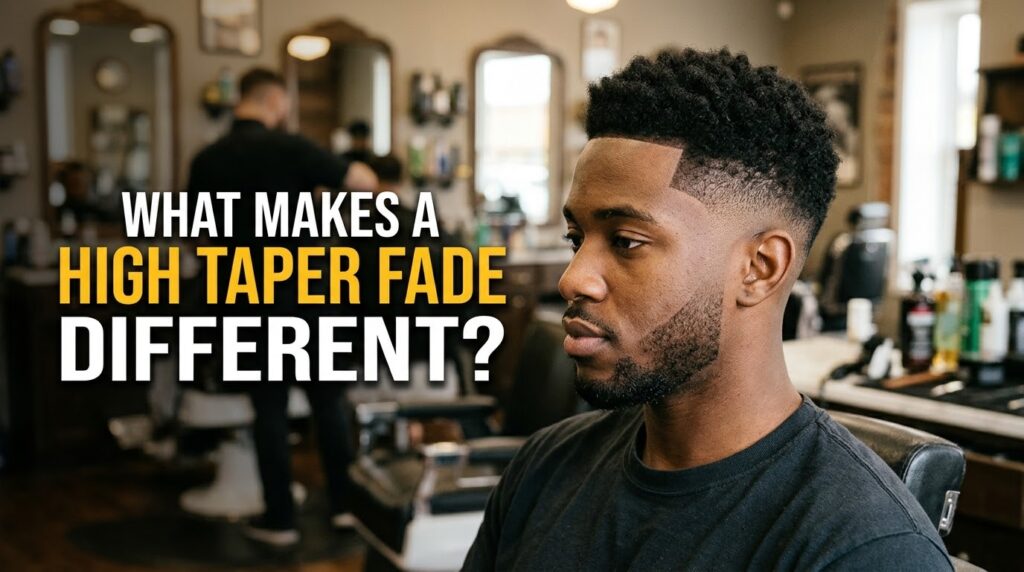
A high taper fade starts the shortening near the temple and upper sides. The hair gets shorter as it moves down. The result is a clear contrast between the top and the sides.
A taper leaves the hairline and neckline softer. A fade goes much shorter, often down to the skin. The high taper fade mixes both ideas. It gives you a bold look with a clean finish.
| Feature | High Taper Fade |
| Start point | Near the temple |
| Contrast | Strong |
| Neckline | Clean and tidy |
| Best for | Bold, sharp looks |
High Taper vs Mid Taper vs High Fade
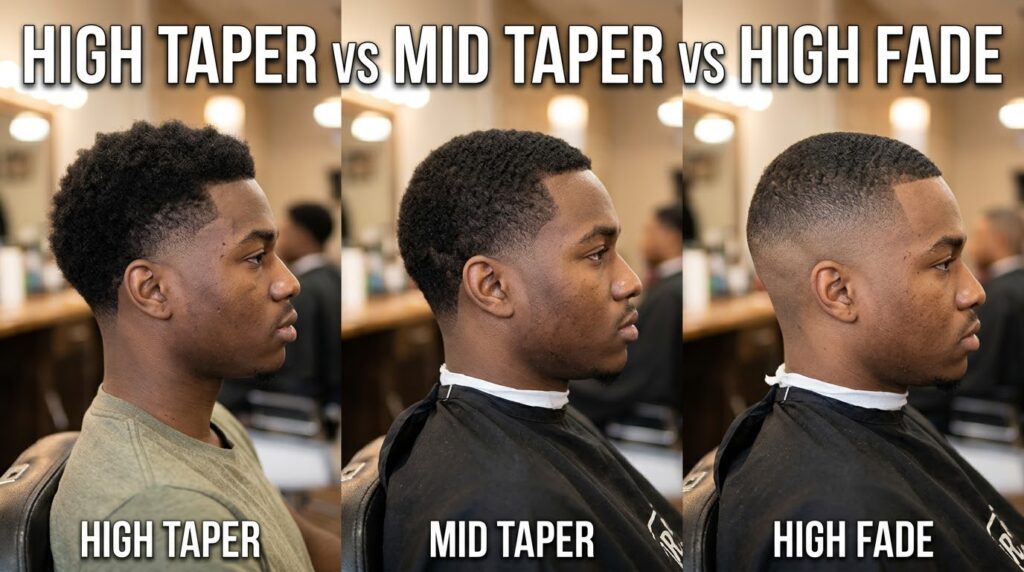
These three cuts look close, but they are not the same. The start point of the blend is the main difference. A high taper starts high, a mid taper starts at the middle, and a high fade starts high but goes much shorter.
A high taper keeps more length on the sides than a high fade. That makes it softer and easier to wear daily. A mid taper is the safest choice for office settings.
Compare Your Preferences First
Think about your daily life before you pick a cut. Ask yourself how much time you want to spend on styling. Also think about your job and how often you can visit a barber.
Use this quick check:
- Want a bold look? Choose a high taper or high fade.
- Want a safe look? Choose a mid or low taper.
- Hate frequent trims? Choose a low taper.
- Love sharp lines? Choose a high taper with a skin finish.
Low Taper vs High Taper
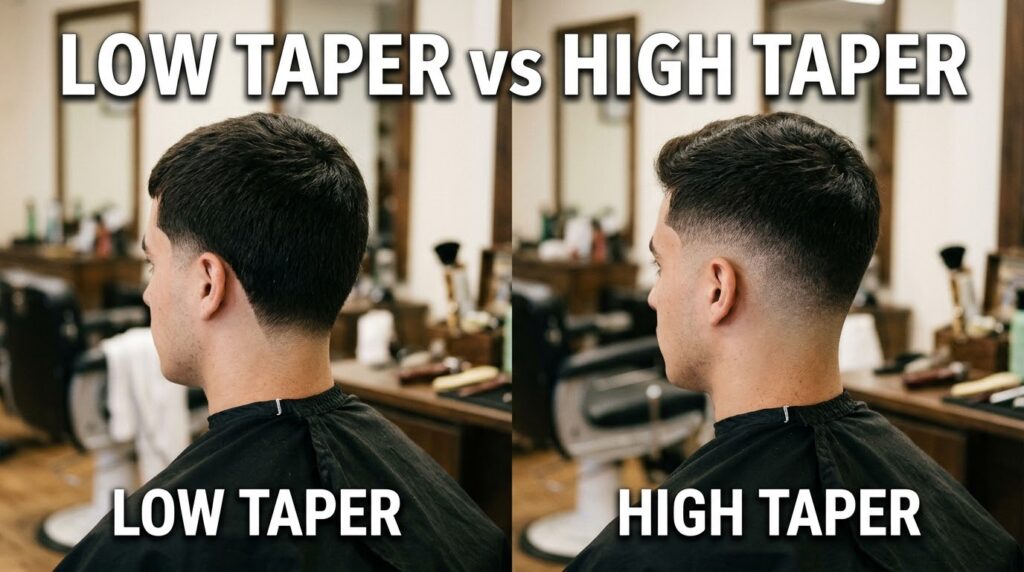
A low taper starts near the ears and the neckline. It leaves most of the side hair untouched. It looks calm, neat, and professional.
A high taper starts much higher. It shows more skin and feels more modern. A low taper grows out faster without looking messy. A high taper needs more upkeep to stay sharp.
| Point | Low Taper | High Taper |
| Start height | Near ears | Near temples |
| Look | Soft | Bold |
| Upkeep | Low | Medium to high |
| Work friendly | Yes | Yes, with a soft finish |
Low Taper vs Mid vs High
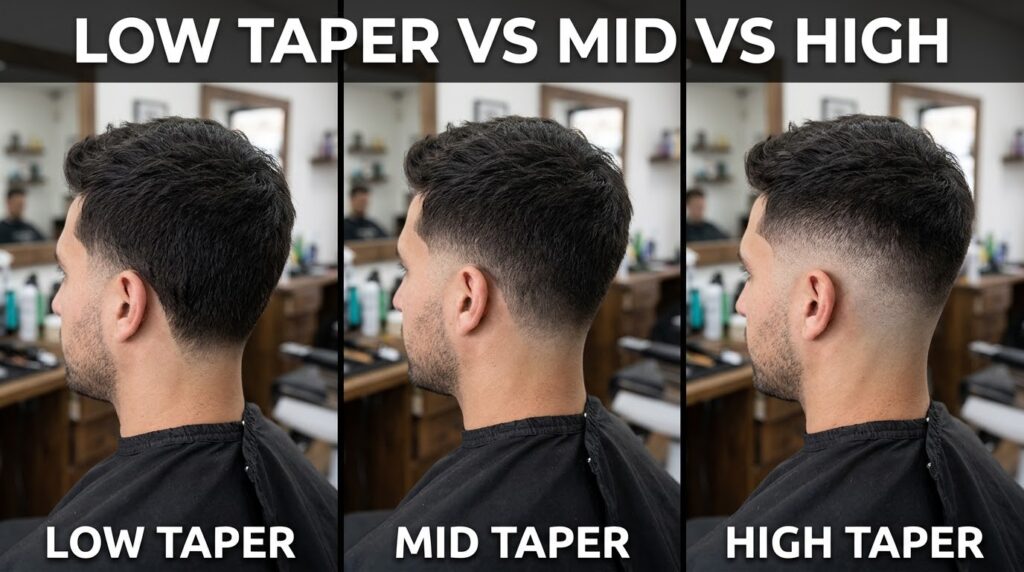
Here is the simple way to see all three together. Low is subtle. Mid is balanced. High is strong.
- Low taper: Best for a clean, quiet look.
- Mid taper: Best for a balanced, all-round look.
- High taper: Best for a clear, fashion-forward look.
If you are new to tapers, start with mid. Move higher once you know what you like. You can always ask your barber to go shorter next time.
High Taper on the Sides
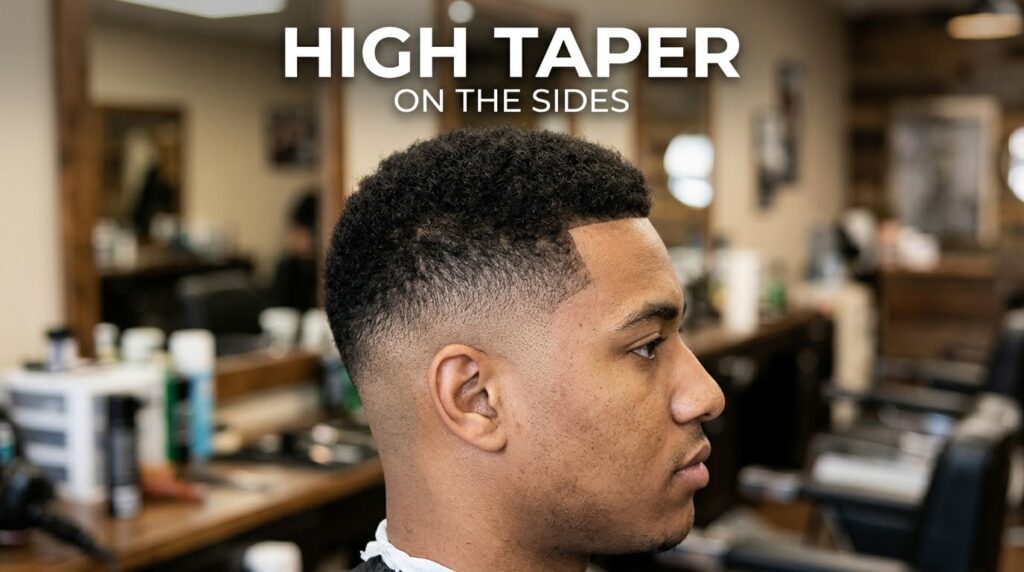
The sides are where the high taper shows its power. The blend should look smooth with no harsh lines. Good barbers use clippers and a scissor-over-comb tool to soften the steps.
Ask for a gradual blend from the temple down to the neck. Keep the part above the ear slightly longer if you want a softer look. A clean sideburn line also adds a lot of polish.
Who Suits a High Taper Fade?
Most men can wear this cut. It works best on oval, square, and long faces. It adds shape and makes the jaw look stronger.
Round faces can wear it too. Keep the top taller to add height. If you have a narrow face, avoid going too short on the sides. A bit of extra length keeps the face balanced.
- Oval face: Works with almost any top.
- Square face: Looks strong and sharp.
- Round face: Add volume on top.
- Long face: Keep the top shorter.
Side and Rear Views Matter
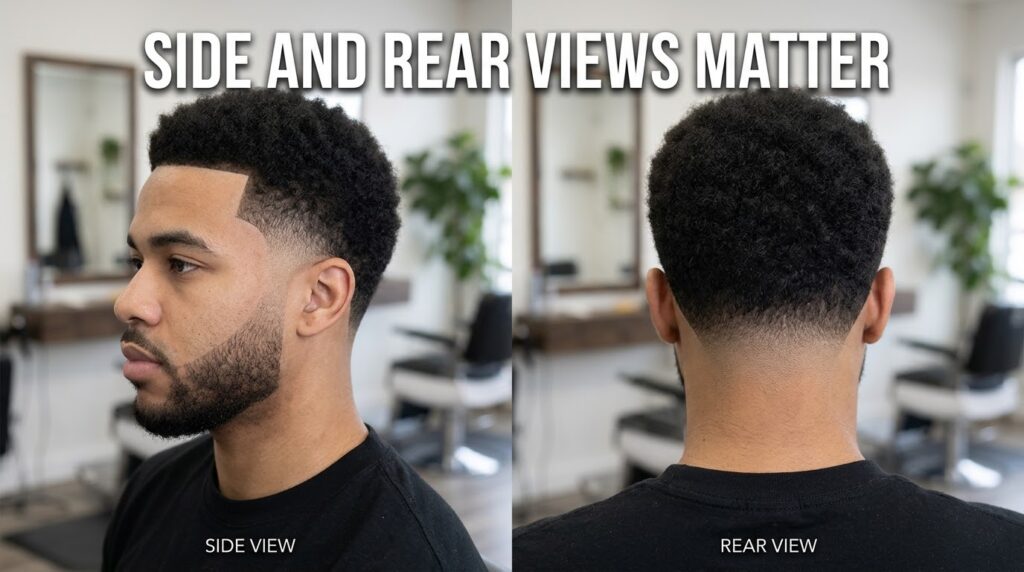
Many men only check the front in the mirror. The sides and the back matter just as much. A good fade looks smooth from every angle.
Always ask your barber to show you the back with a hand mirror. Check that the neckline is even. Look for patchy spots near the ears. A clean rear view is the mark of a skilled barber.
High Taper Fade Finishes: Shadow, Zero or Skin
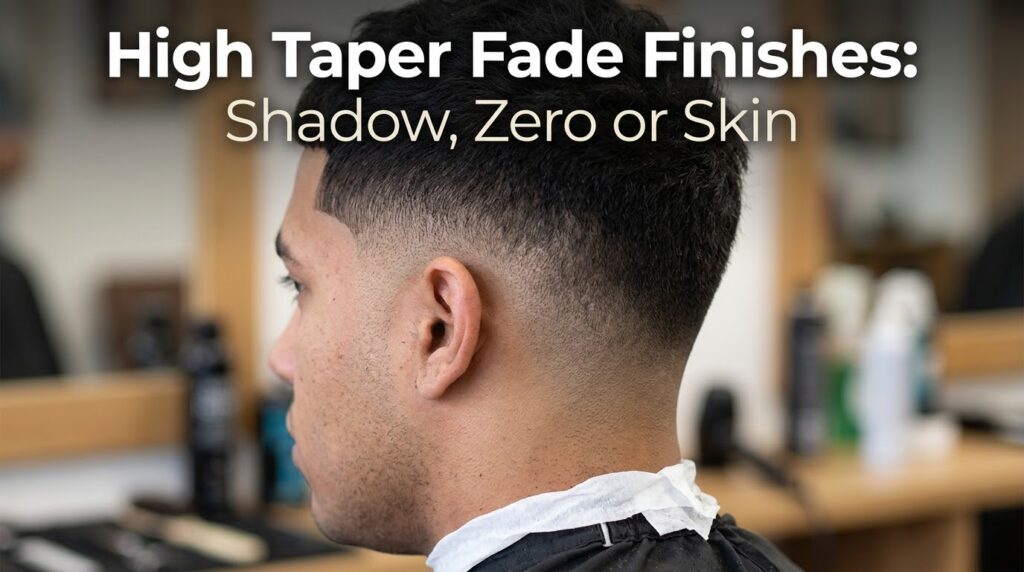
The finish is how short the bottom of the fade goes. It changes the whole mood of the cut.
| Finish | Look | Best For |
| Shadow | Soft and subtle | Office and daily wear |
| Zero | Very short, tight | Clean, sharp style |
| Skin | Bare skin, high contrast | Bold, modern look |
A shadow finish is gentle and easy to keep. A zero finish is crisp but still has a hint of hair. A skin finish gives the strongest contrast but grows out fast.
High Skin Taper Haircut
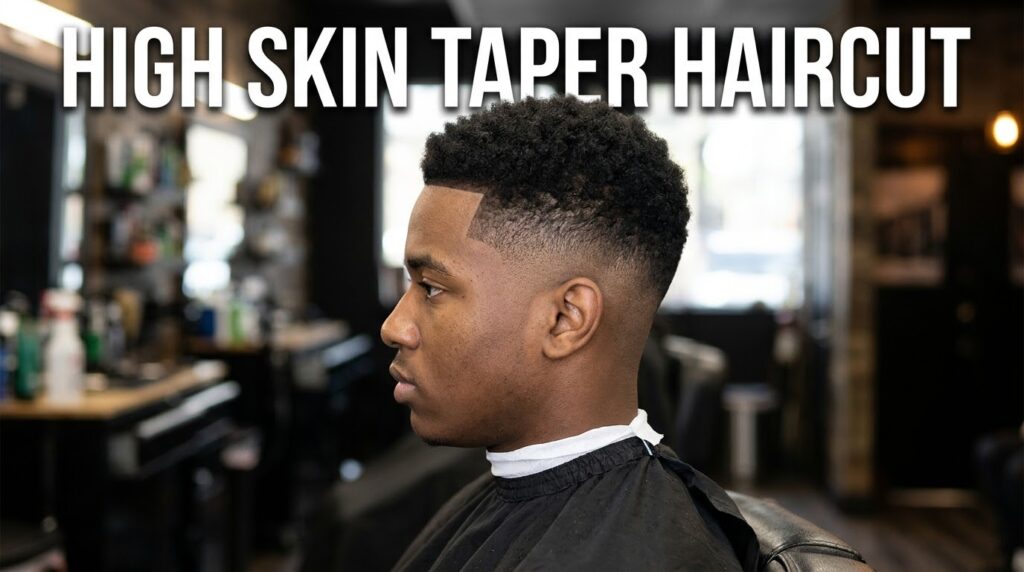
A high skin taper takes the hair all the way down to the skin near the bottom. It makes the top stand out even more. This cut looks great with waves, curls, and thick hair.
It needs a trim every two weeks to stay sharp. Skin shows regrowth quickly. Use a moisturizer after each cut to keep the skin calm and smooth.
See More : 7 Best Mid Taper Fade Styles for Straight Hair 2026
5 High Taper Fade Styles to Consider
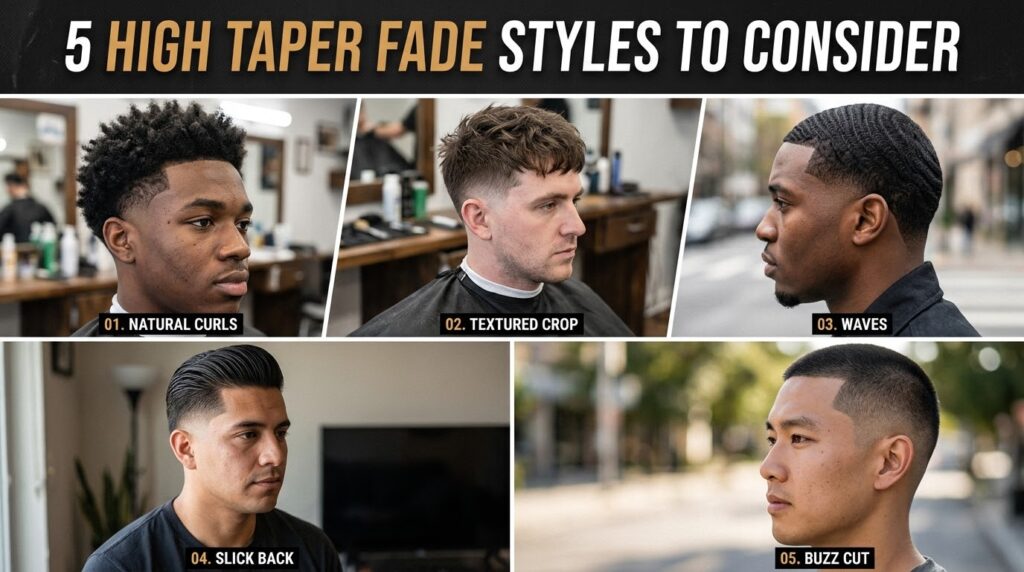
Here are five styles that are popular in 2026. Each one works with a different hair type and taste.
- Textured crop: Short, messy top with a high taper. Easy to style with clay.
- Quiff: Taller front swept up and back. Gives a classic, polished look.
- Slick back: Smooth, combed hair with clean sides. Great for formal days.
- Curly top: Natural curls on top with sharp sides. Adds fun and contrast.
- Waves and crop: Short, brushed waves with a skin taper. A clean, modern favorite.
Pick the one that fits your hair and your daily routine. Show your barber a picture to avoid mistakes.
How Texture and Density Change the Result
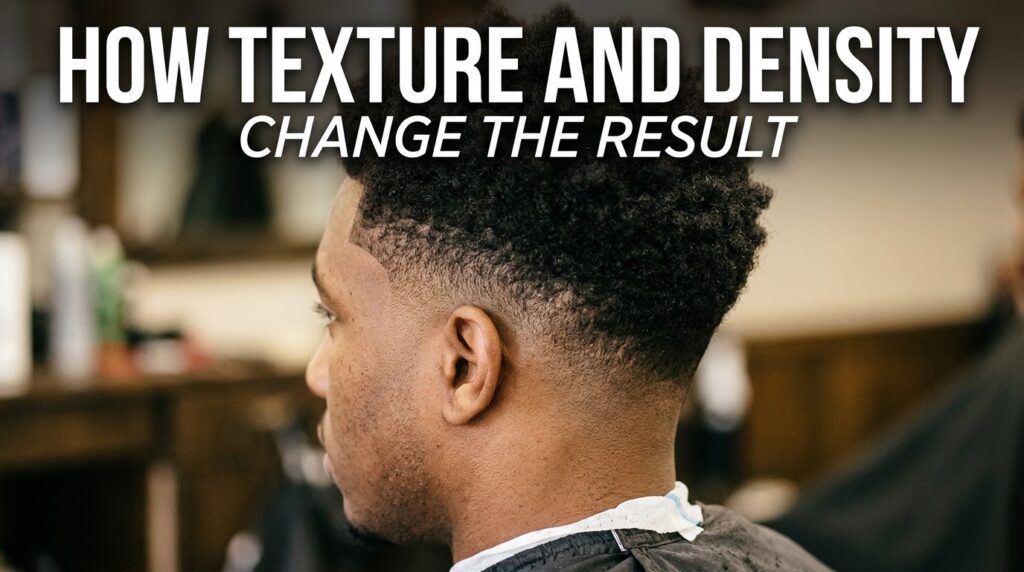
Hair type changes how a fade looks. Thick hair holds shape well and gives a strong contrast. Thin hair needs a softer fade so the scalp does not show too much.
Straight hair shows every line, so the blend must be perfect. Curly hair hides small errors and adds natural volume. Wavy hair gives a relaxed look with less styling.
- Thick hair: Strong and full.
- Thin hair: Keep the top a bit longer.
- Coarse hair: Use light cream for control.
- Fine hair: Use powder or sea salt spray for lift.
Straight Hair High Taper
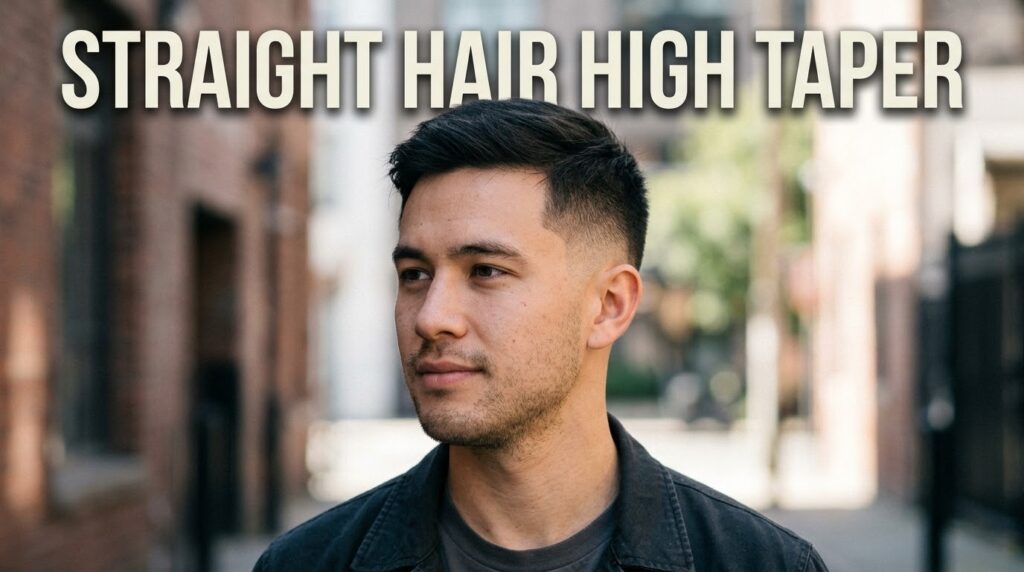
Straight hair works very well with a high taper. The hair lies flat, so the fade looks clean and smooth. This makes it a great choice for short crops and side parts.
Use a light product to add texture. Matte paste works best. Avoid heavy gel, which can make straight hair look flat. A comb helps keep the top neat all day.
High Taper Fade
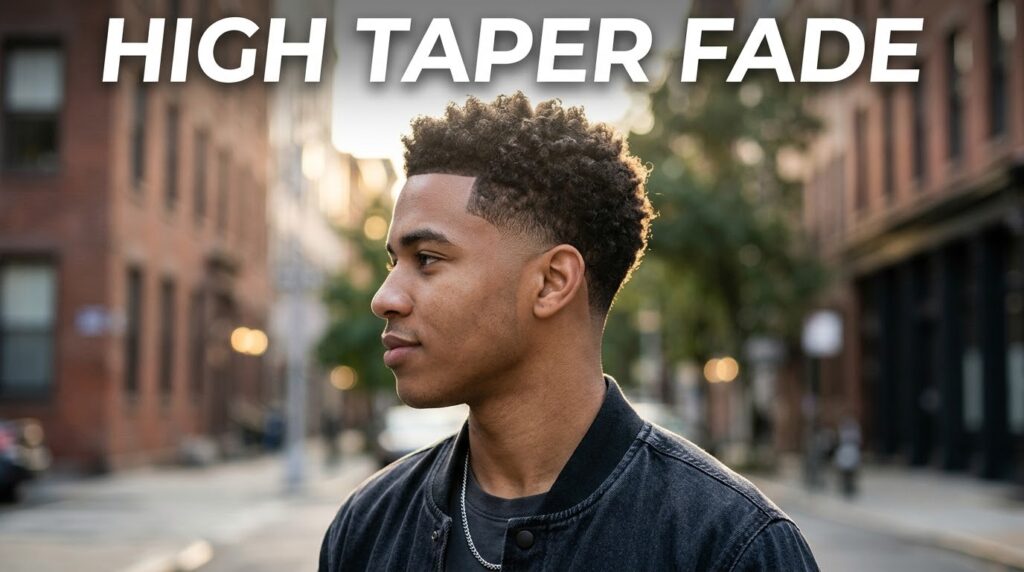
The classic high taper fade is simple and strong. The sides blend up high, while the top keeps its length. It suits both casual and formal looks.
The key is the blend. A smooth change from short to long makes the cut look expensive. A good barber will take their time with this step. Do not rush it.
High Taper Fade Men
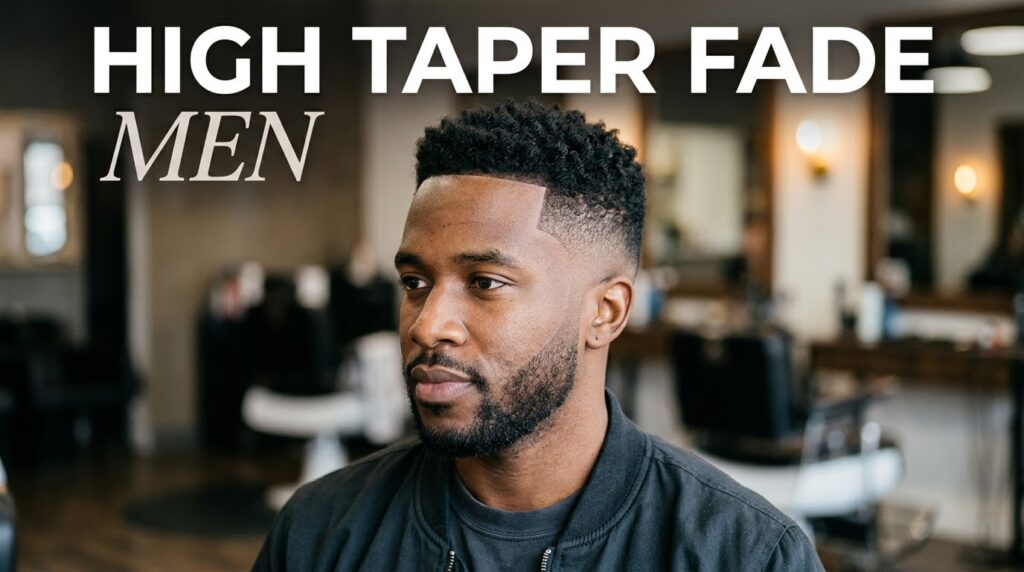
For men, this cut is easy to wear and easy to style. It fits a gym day, a job interview, or a night out. It also works at any age.
Younger men often pair it with a textured top. Older men like it with a short, neat crop. Both look clean. Pick a top length that suits your face and your lifestyle.
Short Hair High Taper Fade
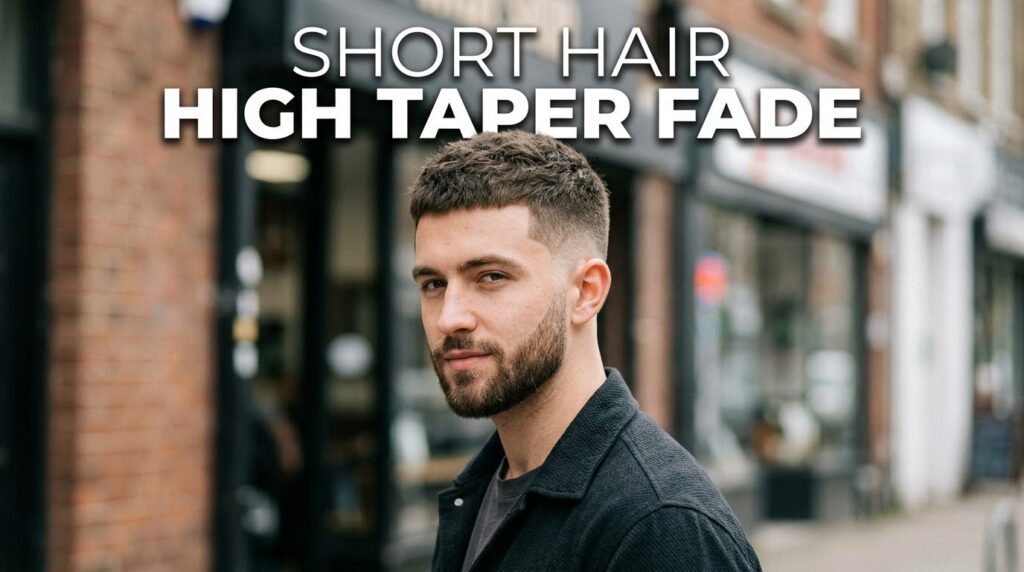
Short hair keeps the cut clean and low effort. A short crop on top with a high taper is a great base. You can wash and go in minutes.
Ask for a number two or three on top. Add a little matte clay for texture. This style works well in warm weather, including hot cities, since it stays light and cool.
High Taper Fade Afro
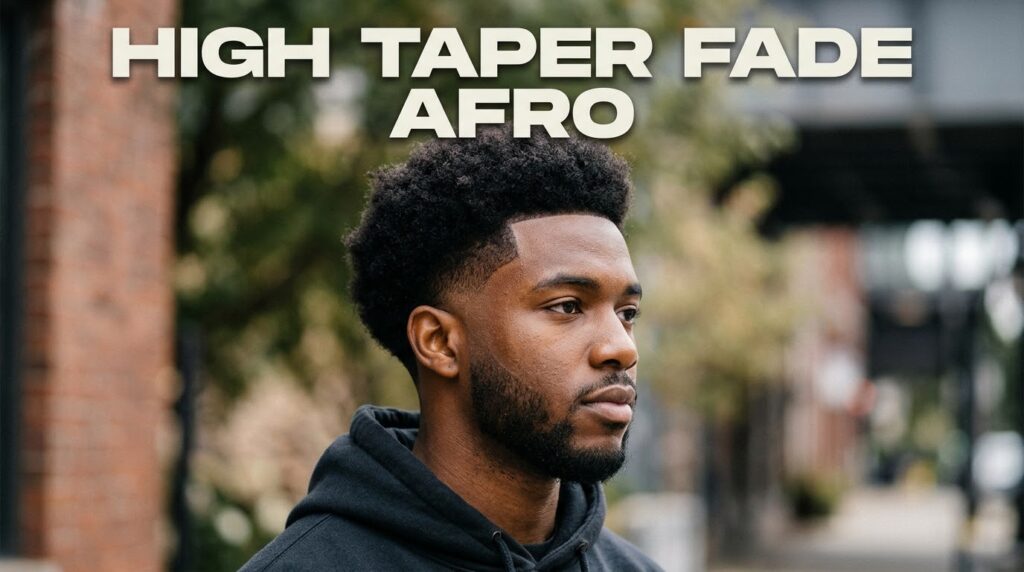
A high taper fade with an afro shows off natural volume and shape. The top stays full and rounded while the sides are cut tight. The contrast looks bold and confident.
Keep the afro well moisturized so it stays soft. A shape-up on the hairline gives a crisp frame. Ask your barber to round the top evenly for a balanced shape.
High Taper Fade Curly Hair
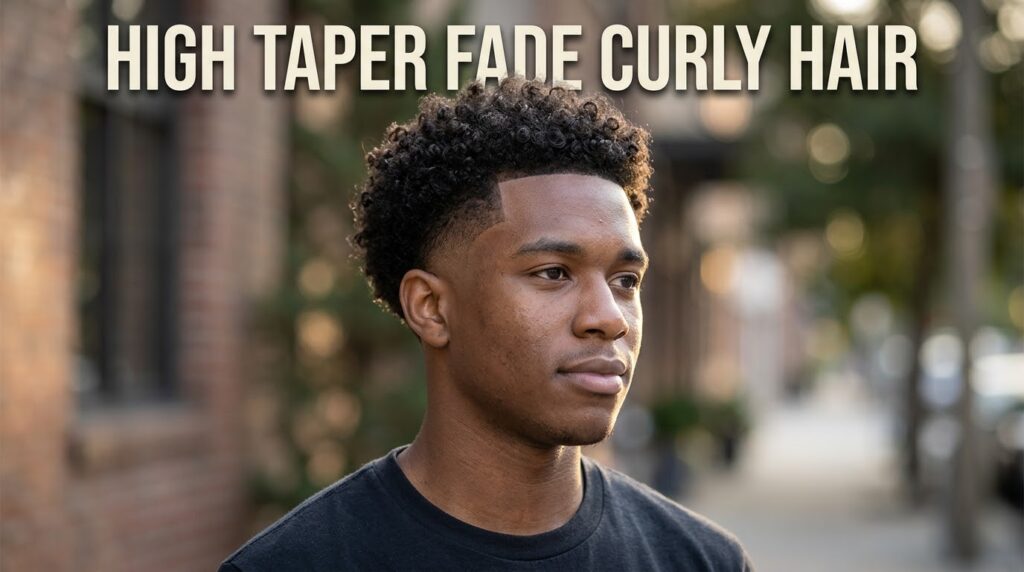
Curly hair and a high taper are a great match. The tight sides control size, while the curls on top stay playful. It gives you shape without losing your natural texture.
Use a curl cream on damp hair. Let it air dry or use a diffuser. Avoid brushing dry curls, as this causes frizz. A light trim every few weeks keeps the shape neat.
High Taper Fade Black Male
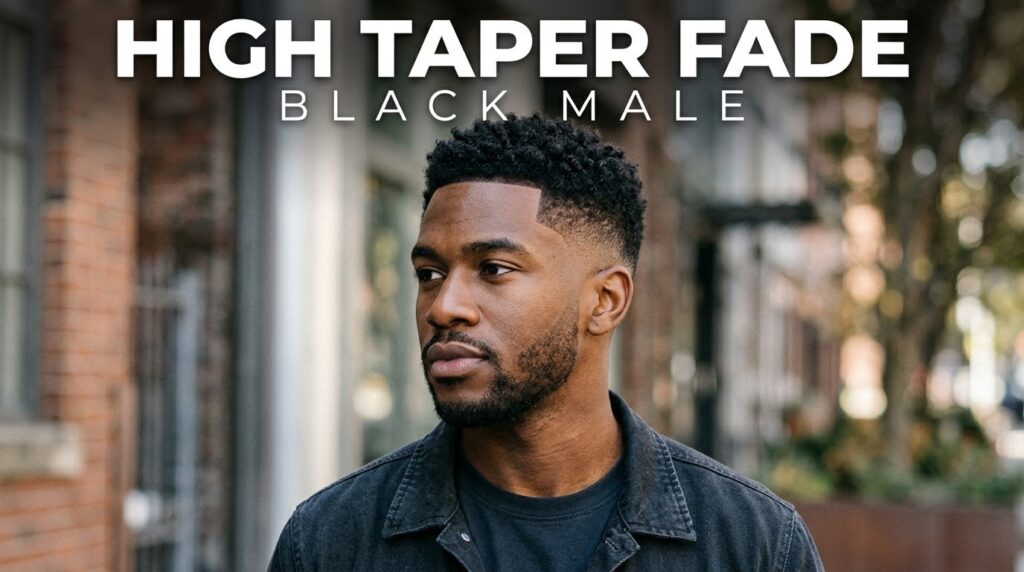
This is a very popular choice for Black men. It works with waves, curls, twists, and short afros. The clean sides create a sharp frame for the top.
Many barbers add a crisp lineup to finish it. A skin finish looks very clean on dark skin. Use a good moisturizer and a soft brush to keep the hair healthy and shiny.
High Taper Fade Black
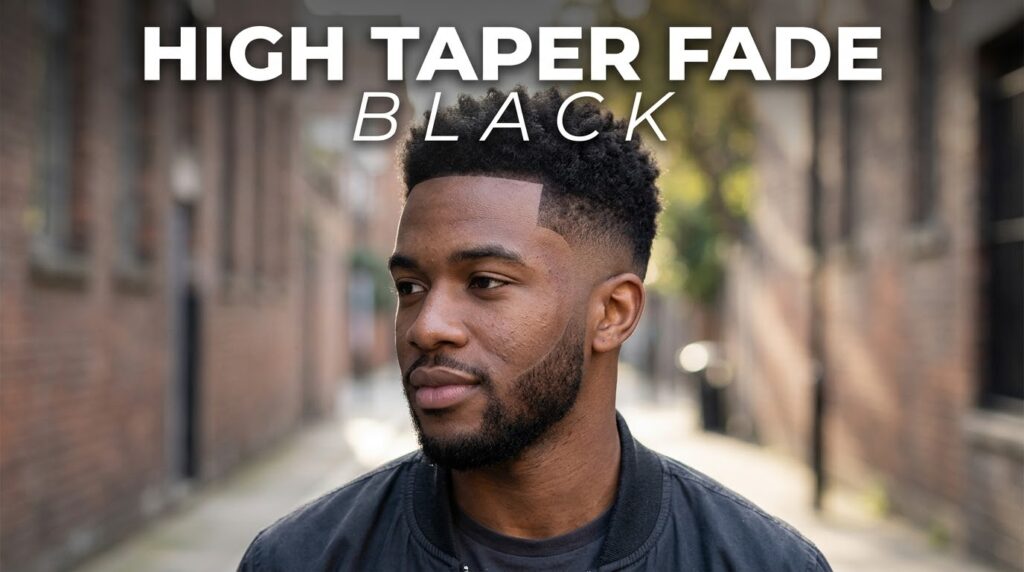
Search interest in this style is strong. People like it because it is clean and flexible. You can wear it with a short top, a sponge twist, or a full afro.
Tell your barber what texture you want on top. Also say how short you want the skin finish. Clear words give better results, so bring a photo if you can.
Mid Taper Fade
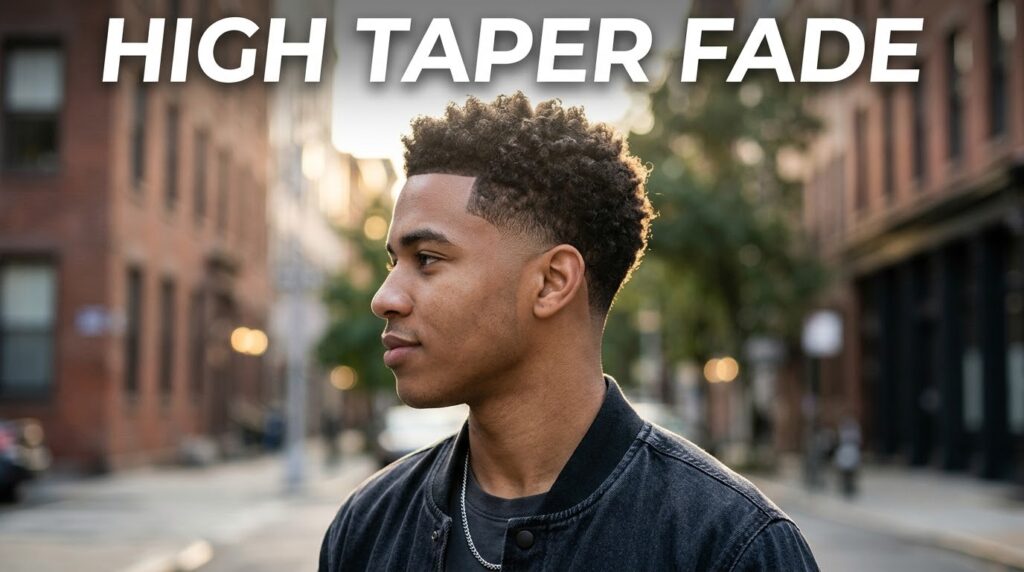
A mid taper fade starts around the middle of the sides. It is a balance between a low and a high taper. It looks clean without being too bold.
This is the best pick if you want something safe. It grows out nicely and fits most workplaces. You can style the top in many ways, from quiffs to short waves.
High Taper Fade Low
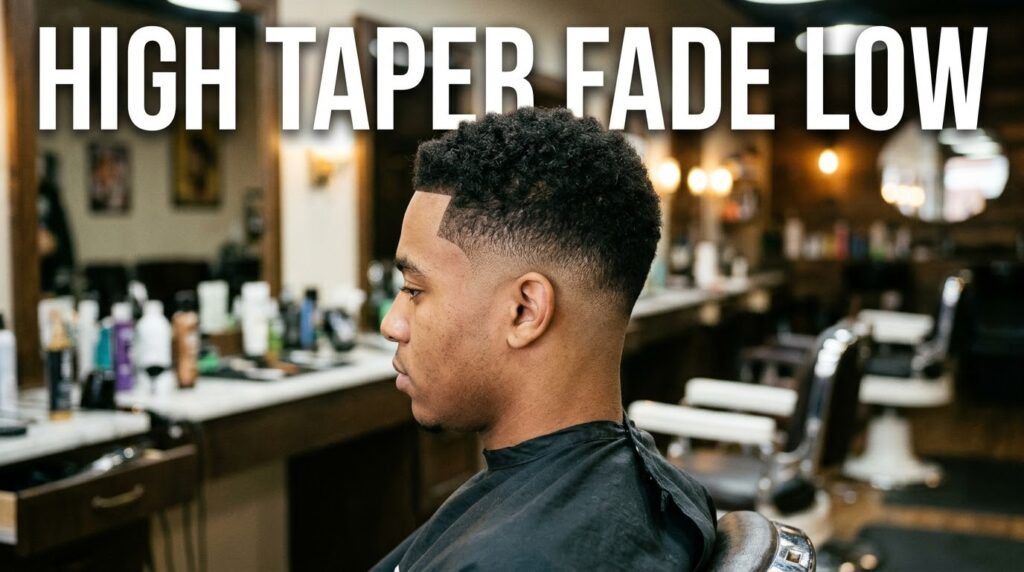
Some men want a high taper on top with a softer, lower finish. This mixes the bold start of a high taper with a gentle end. The result looks fresh but not harsh.
Ask your barber for a high start and a low, soft blend near the neck. It is a smart option if you want a modern look that still feels calm.
Exact Barber Request
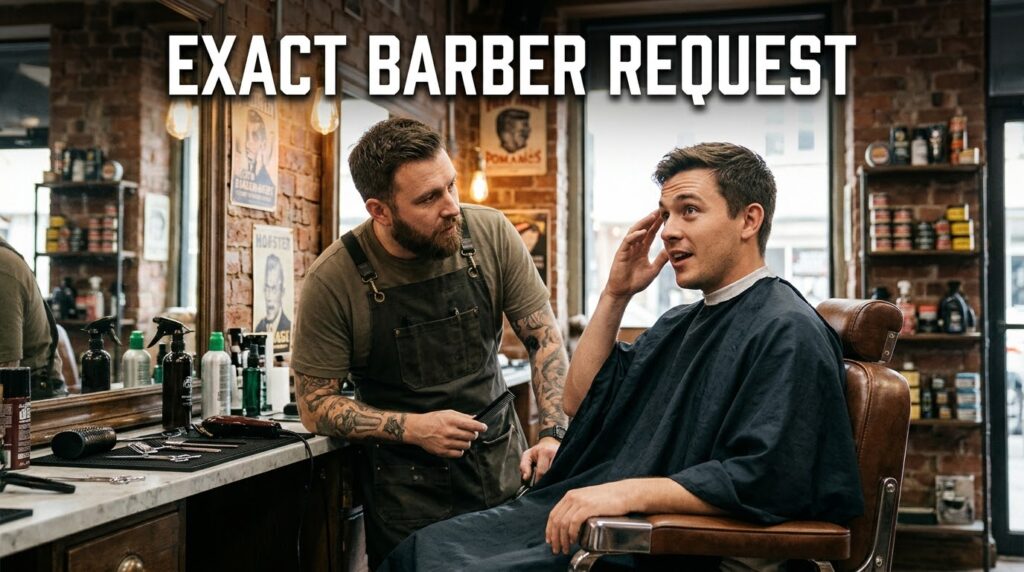
Clear words help your barber get it right. Use simple terms and show a photo. Here is a short script you can use:
“I want a high taper fade.” “Start the blend at the temple.” “Finish with a shadow, zero, or skin.” “Keep the top at about two inches.” “Clean the neckline and the sideburns.”
Also say if you want a lineup. Ask the barber to check the back with a mirror before you leave.
Maintenance and Grow-Out
A high taper needs regular care. Book a trim every two to three weeks. Skin fades need a visit every two weeks to stay sharp.
| Finish | Trim Schedule |
| Shadow | Every 3 weeks |
| Zero | Every 2 to 3 weeks |
| Skin | Every 2 weeks |
For grow-out, stop the fade and ask for a mid or low taper. This helps the cut look neat while it grows. Use a light oil and a soft brush to keep the hair healthy during the change.
Common High Taper Mistakes
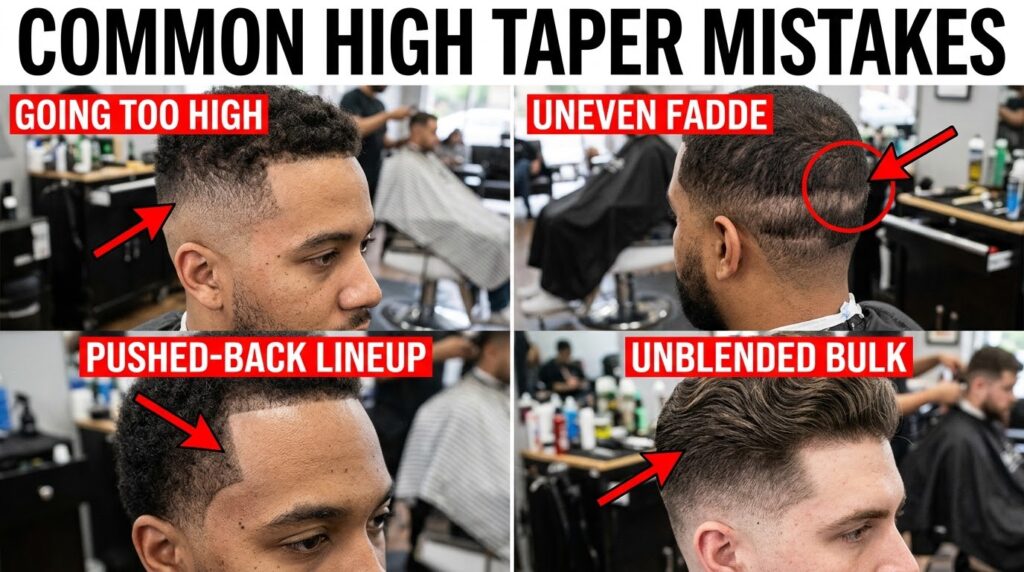
Most mistakes come from poor planning. Avoid these simple errors:
- Going too high for your face shape.
- Skipping a photo and using vague words.
- Not checking the back and sides.
- Using heavy products that make hair look greasy.
- Waiting too long between trims.
A calm chat with your barber solves most problems. Be clear and ask questions.
Sources and Further Reading
For more help, read hair guides from trusted barber brands and grooming sites. Look at barber tutorials on video platforms. Also check hair care advice from licensed stylists and skin experts.
Good topics to explore next include fade types, curl care, scalp health, and face shape guides. Always compare a few sources before trying a new cut.
Frequently Asked Questions
What is a high taper fade?
A high taper fade is a haircut where the sides blend from short to long starting near the temples. It gives a clean, bold look.
What is the difference between a high taper and a high fade?
A high taper keeps more hair on the sides. A high fade goes much shorter, often down to the skin.
How often should I get a high taper fade trimmed?
Most men need a trim every two to three weeks. Skin fades need a touch-up about every two weeks.
Does a high taper fade suit curly hair?
Yes. The tight sides balance the curls on top and give a neat, shaped look.
Is a high taper fade good for work?
Yes. A shadow or soft finish looks clean and professional in most offices.
What should I tell my barber for a high taper fade?
Ask for a high start at the temple, your chosen finish, and the top length you want. A photo helps.
Is a high taper fade better than a mid taper?
It depends on your taste. A high taper is bolder, while a mid taper is safer and easier to keep.
Final Thoughts
The high taper fade is a clean, versatile cut that works on straight, wavy, curly, and afro hair alike. Because the sides blend gradually from short to longer, it keeps a sharp look while leaving plenty of room for personal style on top. Paired with the right finish, it suits nearly any face shape and any man.
To get the result you want, bring a photo to your barber and describe the look clearly, including how short the fade should start and how much length to leave on top. Book regular trims every two to three weeks and look after your hair and scalp between visits. A well-planned fade stays crisp and is easy to maintain.

Ronan Mercer is a measurement focused content writer and researcher at Only Faxhion. He creates clear, practical articles about units, sizes, dimensions, conversions, and measurement concepts, helping readers understand everyday measurement topics through well researched and easy to follow explanations.