
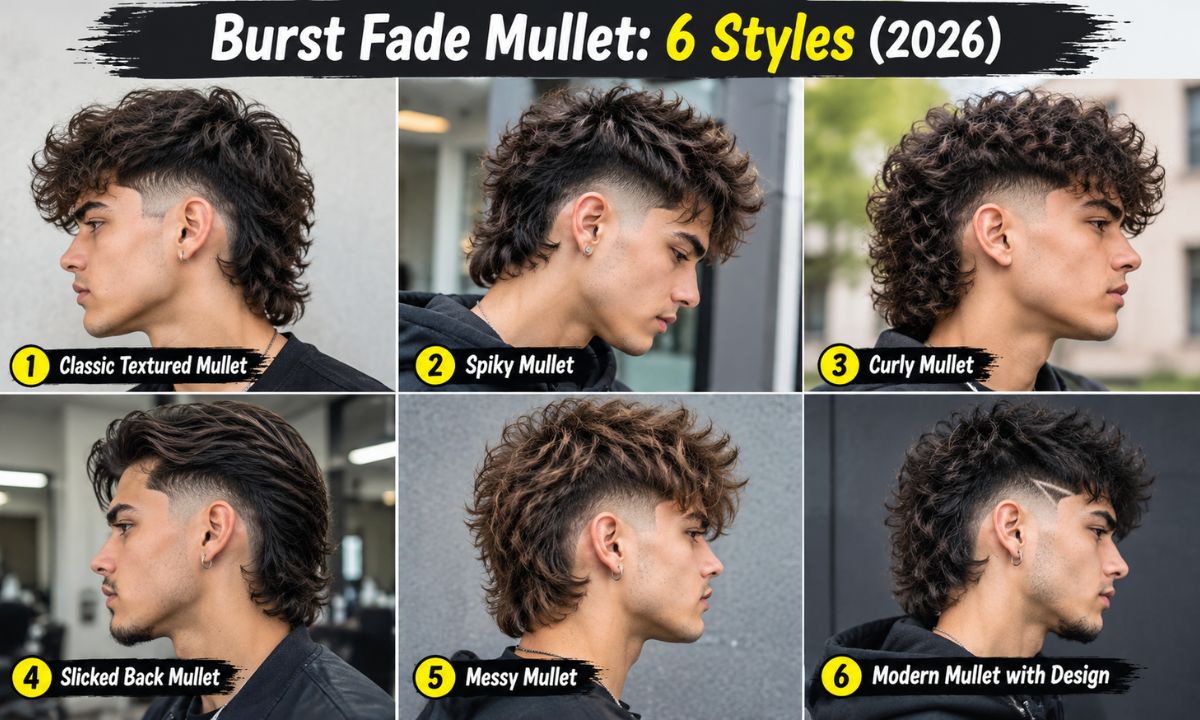
The burst fade mullet pairs a clean, curved fade around the ears with extra length left at the back, giving you a cut that looks bold but stays easy to wear and adjust. It works on straight, wavy, and coily hair alike, so there is a version for nearly everyone. Below you’ll find six styles to choose from, along with simple tips for getting the look you want.
Before you book, decide how much length you want at the back and the top, then use the right words with your barber, such as “burst fade” and “longer nape.” A little texture spray or cream each morning keeps the shape defined, and regular trims every few weeks keep the fade crisp. With the right cut and a quick routine, you can wear this style with confidence every day.
Burst fade mullet gallery: back lengths and textures
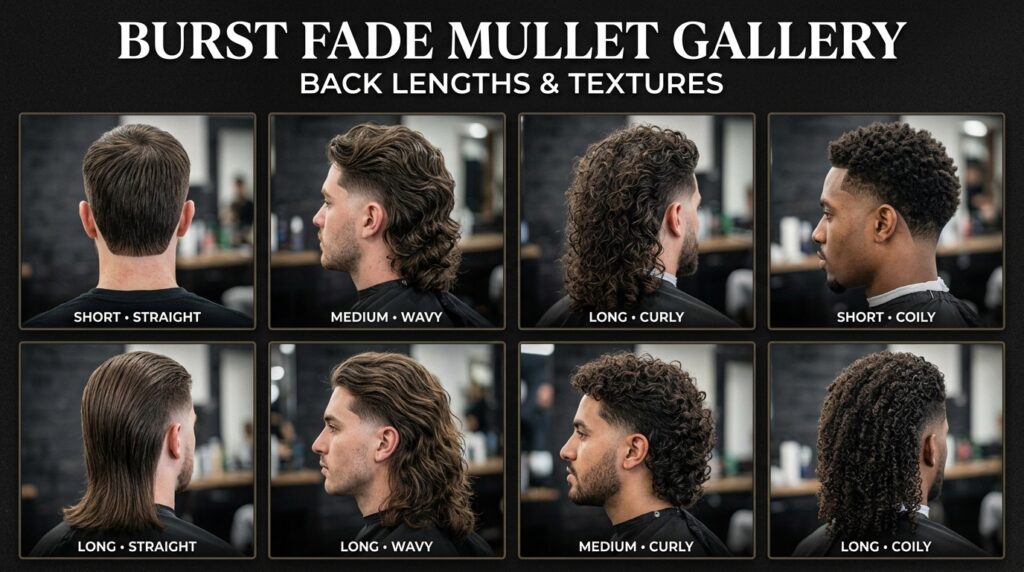
Think of this section as a quick menu. Each style changes the back length and the texture on top. Use it to find a look before you sit in the chair.
| Style | Back Length | Best Texture | Vibe |
| Short Burst Mullet | Just past the nape | Straight, wavy | Clean and office-friendly |
| Textured Burst Mullet | Collar length | Wavy | Relaxed and casual |
| Curly Burst Mullet | Mid-neck | Curly | Soft and full |
| Coily Burst Mullet | Neck to shoulder | Coily | Bold and defined |
| Long Statement Mullet | Past the shoulders | Straight, wavy | Dramatic |
| Spiky Burst Mullet | Short to medium | Thick straight | Edgy and sharp |
Burst Fade Mullet: Side, Back and Coily Variation
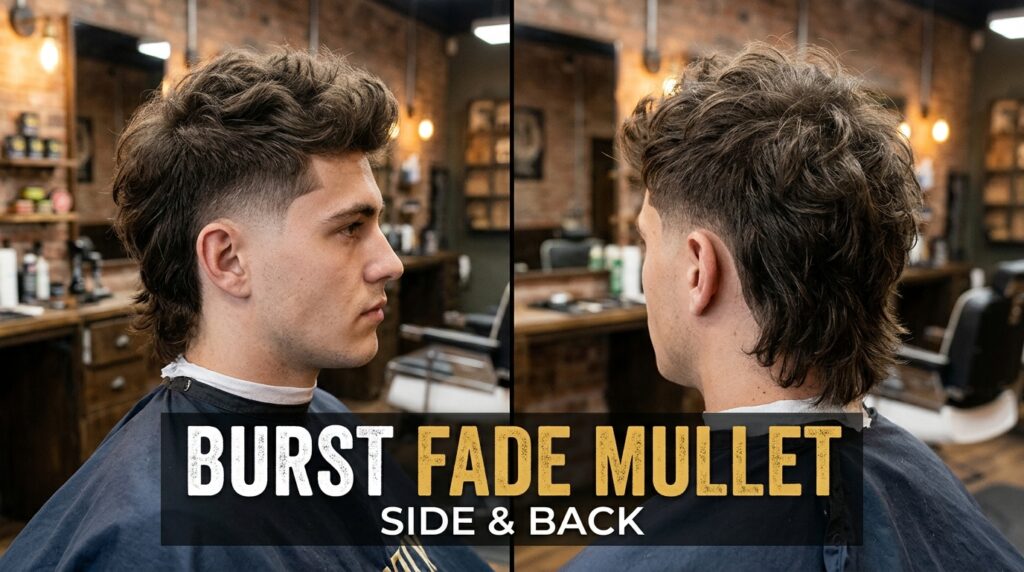
The side, back and top can each be styled in a different way. That is why this cut feels personal. You can keep the sides tight and the back soft, or go the other way.
Coily hair adds extra shape to this cut. The curved fade frames the ears, and the back can stand out in natural coils. It gives strong contrast without looking harsh.
Compare your preferences first
Before you book, ask yourself a few simple questions. Your answers will shape the whole cut.
- How short do you want the sides?
- Do you want a hidden mullet or a loud one?
- Does your job allow a bold look?
- How much time can you spend styling?
If you like low effort, pick a shorter back. If you love attention, go longer. Be honest about your routine, since a high-maintenance cut gets old fast.
The Anatomy of a Burst Fade Mullet
This cut has three main parts. Knowing them helps you talk to your barber with confidence.
- The burst: a curved fade that wraps around the ear in a half-circle shape.
- The top: longer hair that can be textured, swept or curled.
- The back: the mullet section that hangs behind the neck.
The fade blends from skin or a very short length up into the longer hair. The curve around the ear is what makes it a “burst.” The back stays untouched by the fade, which keeps its length.
Burst Fade Mullet vs Taper Mullet
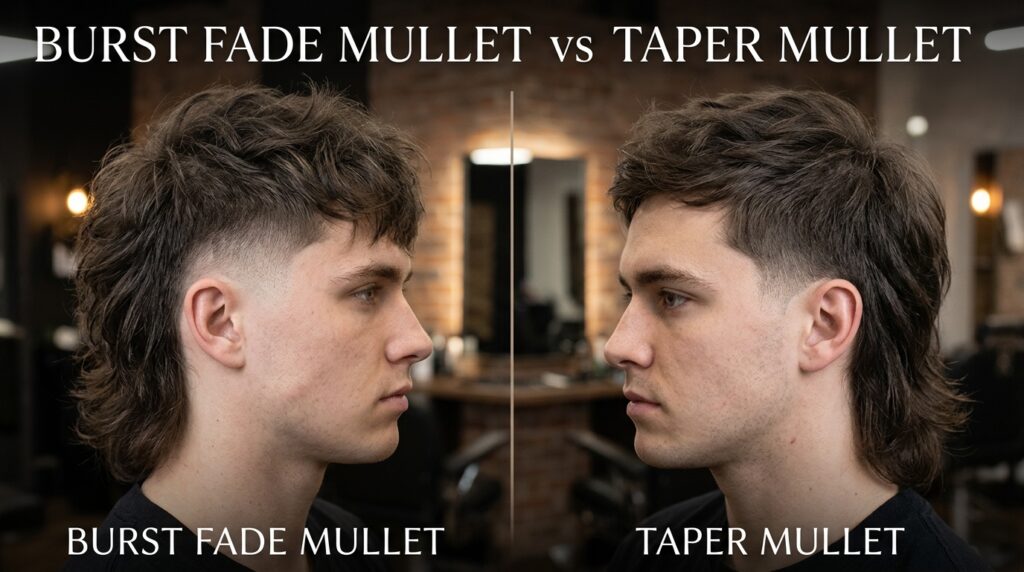
Both cuts look good, but they feel different. A burst fade is rounder and more dramatic. A taper is straighter and more subtle.
| Feature | Burst Fade Mullet | Taper Mullet |
| Fade shape | Curved around the ear | Follows the hairline |
| Contrast | High | Soft |
| Look | Bold | Classic |
| Skin showing | More | Less |
Pick the burst fade if you want a sharp look. Choose the taper if you want something gentle that grows out well.
Choose How Dramatic You Want the Back
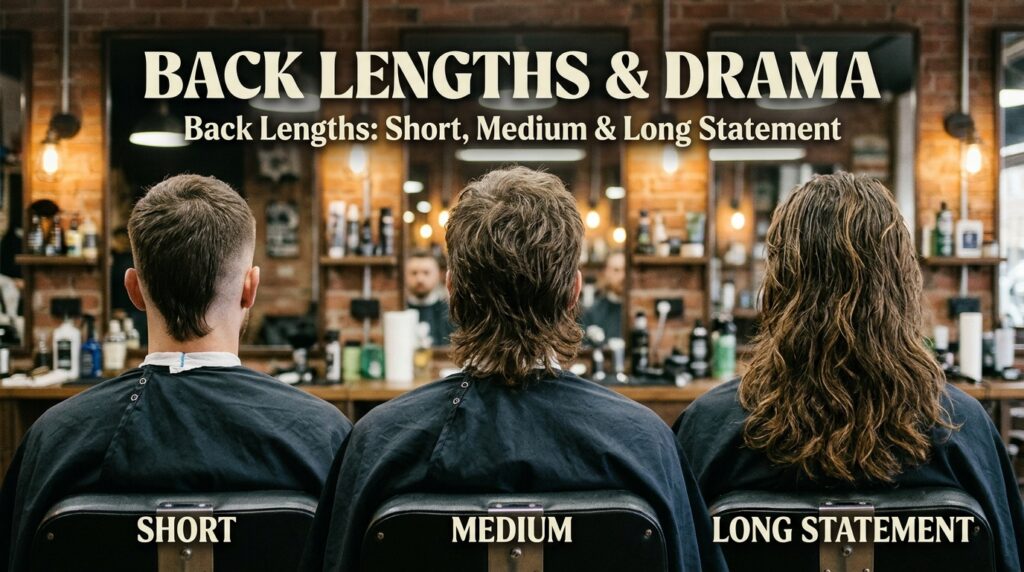
The back is where the mullet shows its personality. You can keep it subtle or make it loud. Here are three levels.
Subtle / short mullet
The back sits just below the nape. It looks neat and works in most workplaces. It is a good start if this is your first mullet.
Medium modern mullet
The length reaches the collar. It has movement and body. This is the most popular choice because it looks bold but still tidy.
Longer statement mullet
The back falls past the shoulders. It needs time to grow and extra care. It is for people who want to stand out.
See More : Mid Taper Fade Wavy Hair: 7 Best Styles (2026)
What to Say to Your Barber
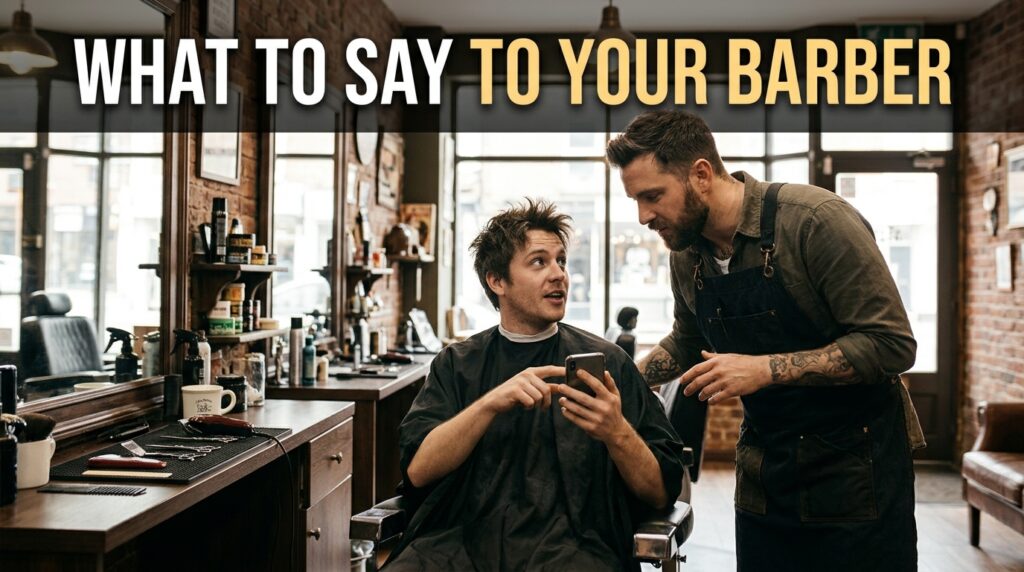
Clear words save you from a bad cut. Photos help, but simple phrases help more.
- “I want a burst fade with a mullet at the back.”
- “Keep the top long and textured.”
- “Fade the sides tight, curved around the ears.”
- “Leave the back about this long,” and show with your fingers.
- “Blend the fade softly into the top.”
Also tell your barber what you do not want. If you hate a harsh line, say so. A short chat before the clippers start is worth it.
How Hair Texture Changes the Cut
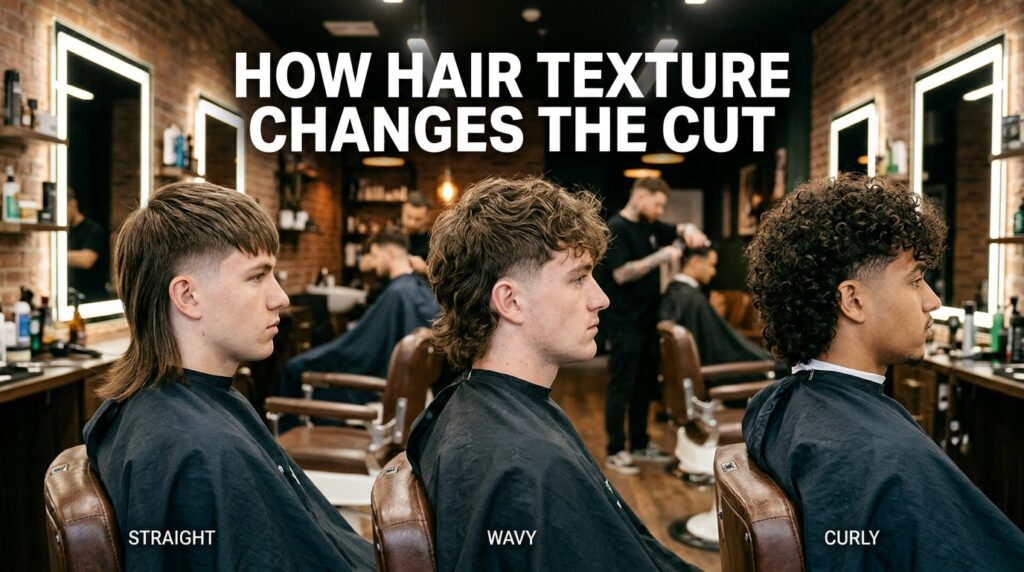
Your hair type changes how the mullet sits and moves. The same cut can look very different on each texture.
Straight hair
Straight hair lies flat and shows the fade line clearly. Ask for layers so the back does not look heavy. A little texture spray adds shape.
Wavy hair
Wavy hair is the easiest to work with. It gives natural movement at the top and back. Light layering keeps it from puffing out.
Curly and coily hair
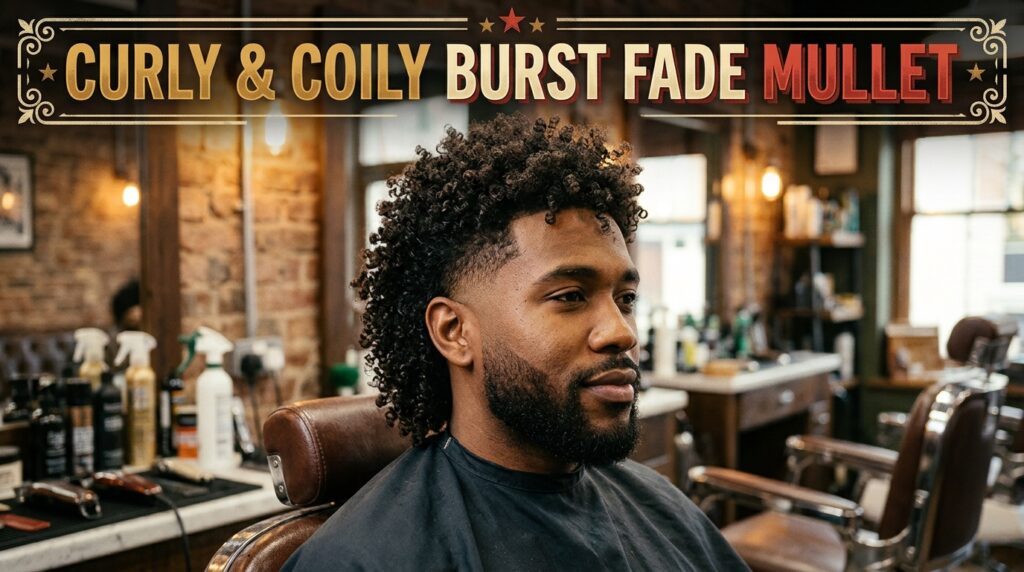
Curls and coils add volume and shape. The back should be cut while the hair is dry so you see the true length. Keep it moisturized to avoid frizz and dry ends.
Styling: Front, Crown and Tail
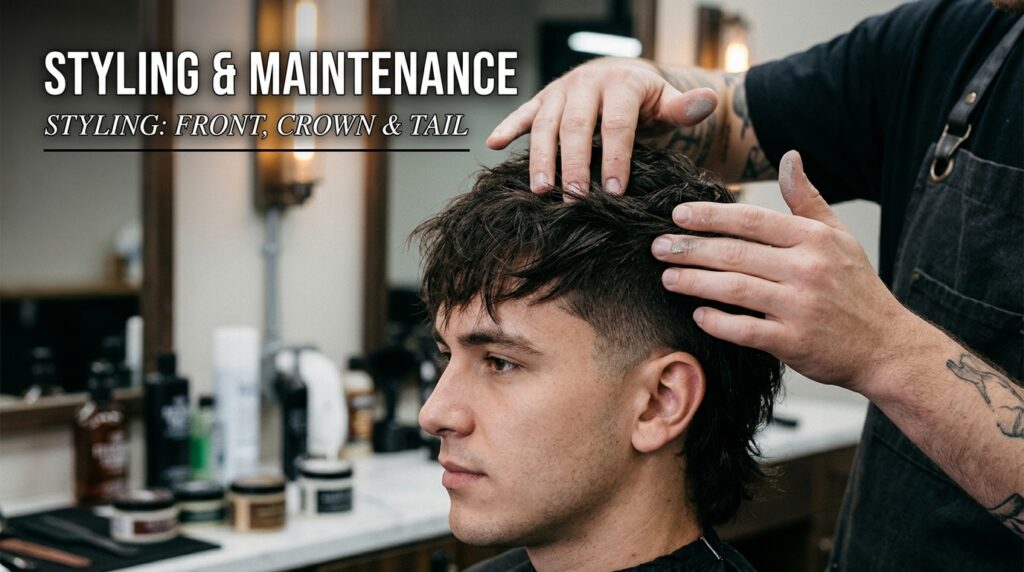
Good styling takes only a few minutes. Treat the cut in three zones.
- Front: Push it up, sweep it to the side, or leave it messy. Use a light paste.
- Crown: Add volume with a blow dryer or a quick finger comb.
- Tail: Let it fall naturally. For curls, use a leave-in cream. For straight hair, use a bit of sea salt spray.
Do not use too much product. Heavy gel makes the mullet look stiff and flat.
Maintenance Without Losing the Mullet
The fade fades out fast, but the mullet keeps growing. That is good news. You only need to refresh the sides often.
- Visit your barber every 2 to 3 weeks for the fade.
- Trim the back lightly every 6 to 8 weeks.
- Wash with a gentle shampoo.
- Use a conditioner on the back to avoid split ends.
Tell your barber to leave the back alone during fade touch-ups. This keeps your length safe while the sides stay sharp.
Burst fade mullet back
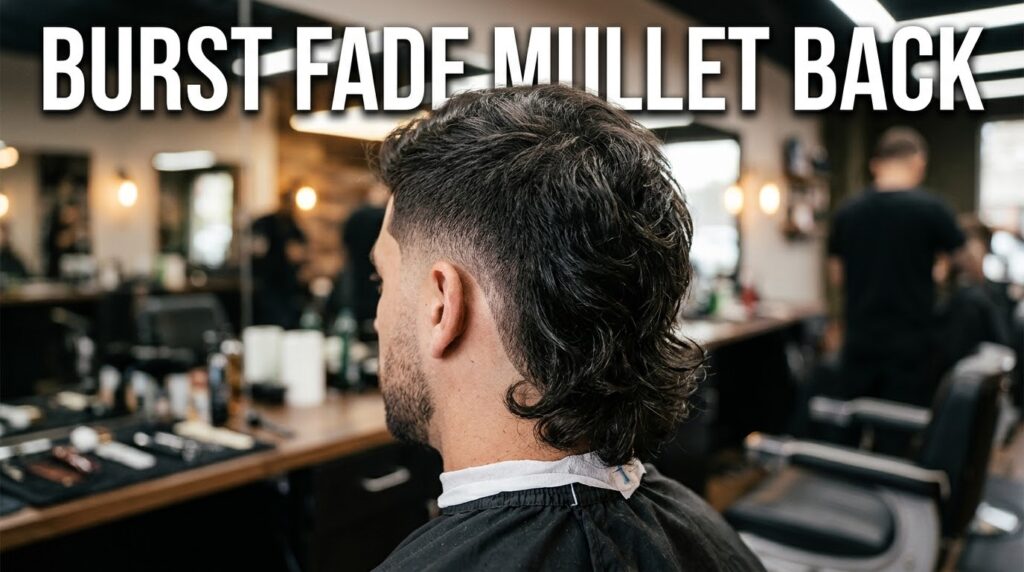
The back of this cut is the star. It can be sharp and cut straight across, or soft with thin layers. Layered ends look more natural. A blunt line looks stronger and cleaner.
Side burst fade
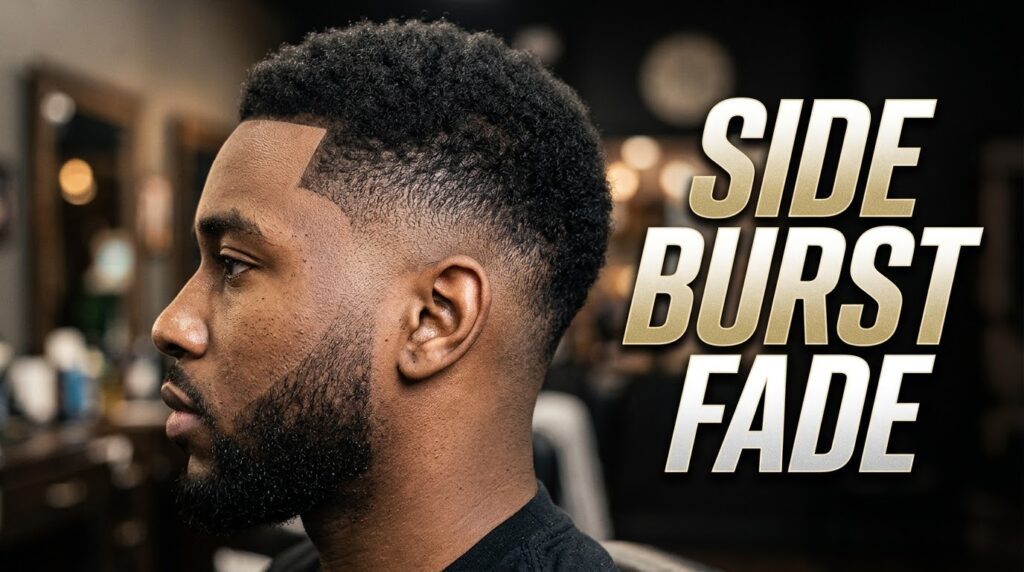
The side burst fade is the part that curves around the ear. It can be low, mid or high. A low burst looks soft and subtle. A high burst gives more contrast and a bolder shape.
Burst taper fade mullet
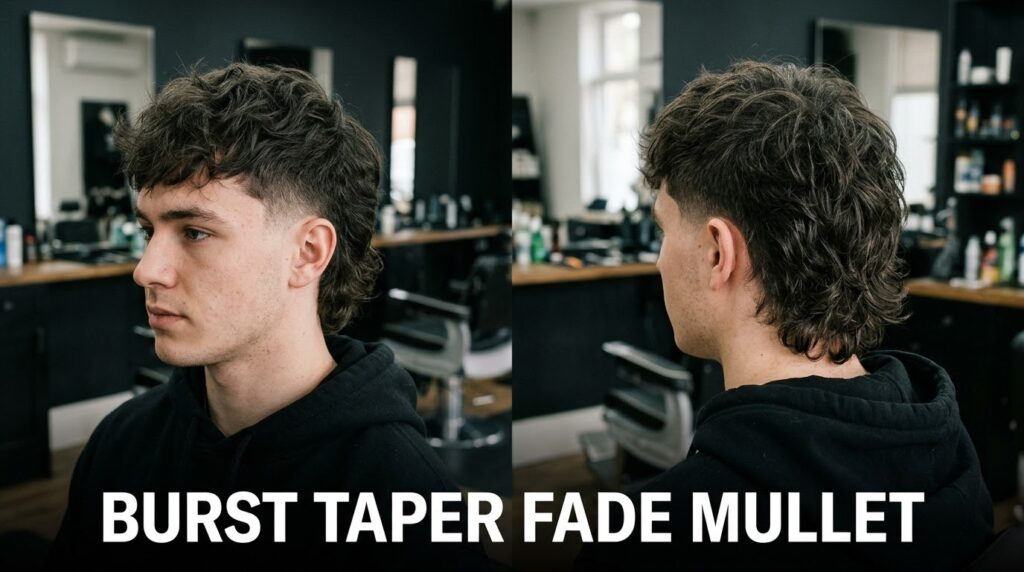
This version mixes the round burst with a taper at the neckline. The result is neat and balanced. It is great if you want drama at the ears but a clean back edge.
Burst taper mullet
The burst taper mullet is a gentler form. The fade is less bare, and the sides keep a little hair. It grows out nicely and suits people who like a lower-risk change.
Burst mullet
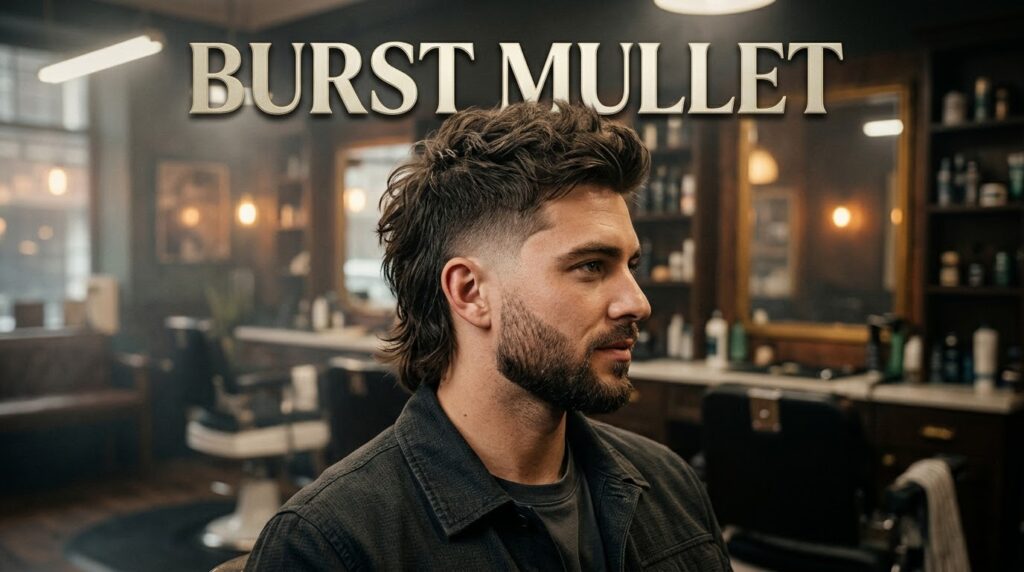
“Burst mullet” is the simple name for the whole cut. It means a curved fade with length at the back. Keep it short, medium or long. Style it your way.
Frequently Asked Questions
What is a burst fade mullet?
It is a haircut with a curved fade around the ears and longer hair at the back. The top is also left longer.
Is a burst fade mullet good for curly hair?
Yes. Curly and coily hair add volume and shape, which makes the cut look full and defined.
How often should I trim a burst fade mullet?
Refresh the fade every 2 to 3 weeks. Trim the back every 6 to 8 weeks.
What is the difference between a burst fade and a taper fade?
A burst fade curves around the ear. A taper fade follows the natural hairline and looks softer.
Can I get a burst fade mullet with short hair?
Yes. You can start with a short back and grow it out over time.
What should I tell my barber for a burst fade mullet?
Say you want a curved burst fade on the sides and a mullet at the back. Show a photo and the back length.
Is the burst fade mullet professional enough for work?
A short or medium version usually works well. Keep the styling neat for a polished look.
Final Thoughts
The burst fade mullet is a versatile cut that works for many styles, whether you prefer a short, clean back or a longer, bolder one. Your hair type and daily routine should guide your choice, since texture and how much time you spend styling will affect how the cut sits and how easy it is to manage.
For the best results, talk clearly with your barber about the shape and length you want. Keep the sides fresh with regular touch-ups and look after the length at the back. With simple styling and trims every few weeks, this haircut can look sharp for months.

Ronan Mercer is a measurement focused content writer and researcher at Only Faxhion. He creates clear, practical articles about units, sizes, dimensions, conversions, and measurement concepts, helping readers understand everyday measurement topics through well researched and easy to follow explanations.